
Request Information
Ready to find out what MSU Denver can do for you? We’ve got you covered.
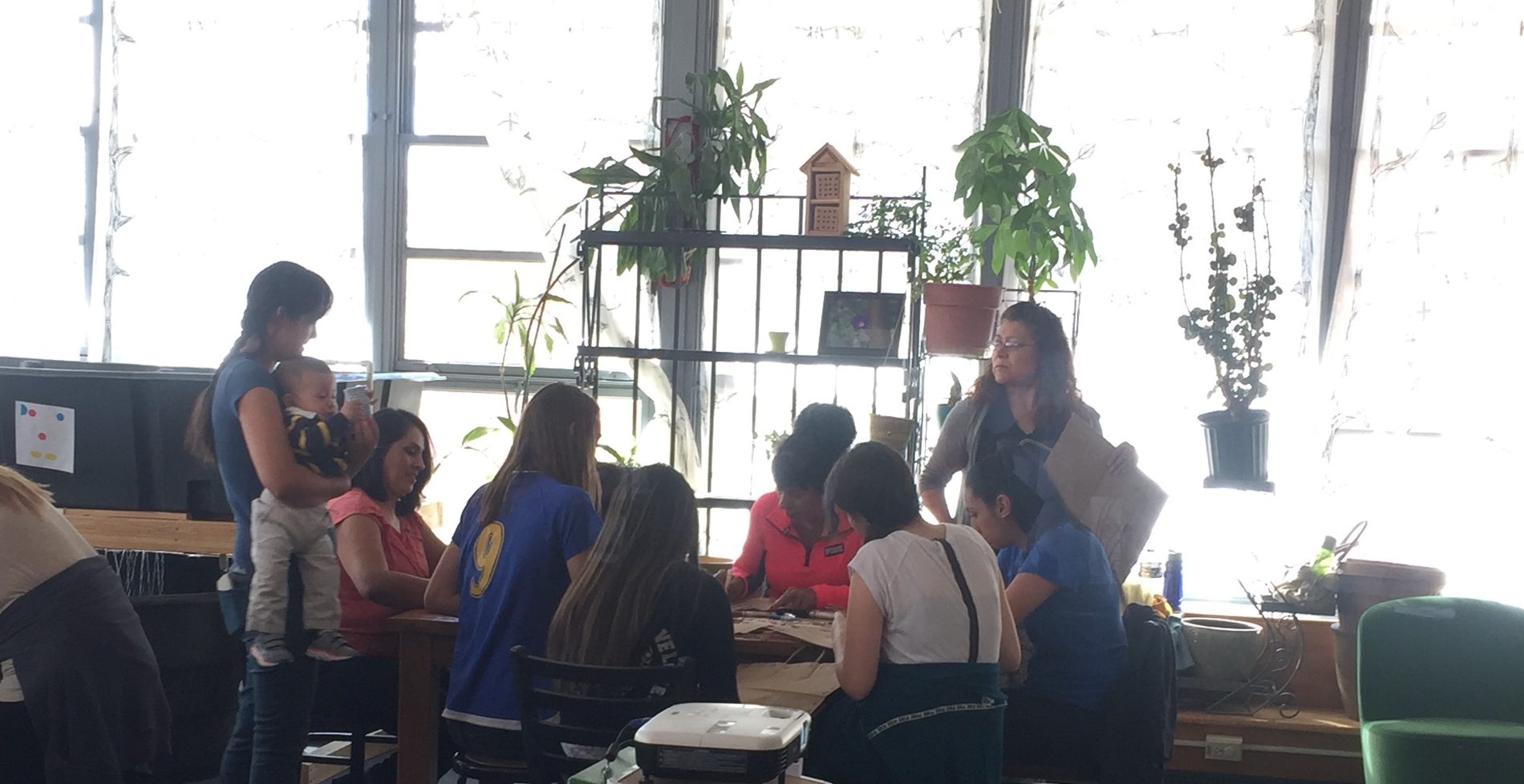
A Faculty/Staff Learning Community (FLC) is a small group of faculty and staff members working together to increase their knowledge and/or skills on a topic of mutual interest.
An FLC provides the structure and support for this group to discuss, share, and encourage one another to reach their full professional potential. In addition to shared learning, FLC members work on personal projects that put into practice what they are learning. Finally, the community is expected to share their knowledge and accomplishments with the wider university community.
Spring 2026
In today’s funding climate, faculty innovation depends on creative resource development. The MSU Denver Fundraising Academy—a faculty learning community co-sponsored by University Advancement (UA) and the Center for Teaching, Learning, and Design (CTLD)—equips faculty with the tools to turn great ideas into funded initiatives.
Led by Dr. Andy Thyrring, UA’s 2025–26 Faculty Fellow and Executive Director for the Office of Education Solutions, the Academy brings together UA leadership for six interactive workshops focused on building donor relationships, crafting compelling cases for support, and navigating the many funding avenues available—from crowdfunding and individual donors to foundation and corporate grants.
Faculty participants will apply their learning by developing a real-world project to pitch in an end-of-semester funding competition, with prizes of $5,000 for first place and $2,500 for second and third. Participants also receive individualized consultation and support to prepare successful MSU Denver Day of Giving campaigns and other funding initiatives.
Join a community of changemakers advancing MSU Denver’s mission—and learn to bring your boldest ideas to life through strategic fundraising and collaboration.
All sessions will occur 9 – 11 AM
This year’s sessions include:
January 30: The Case for Support
February 13: Annual Day of Giving Project Development
February 27: Corporate and Foundation Grants
March 1: Major Gifts
April 10: Donor Stewardship
May 1: Final Workshop
May 8: Case for Support Pitch Competition
Register for this FLC using this link
Facilitator: Dr. Andy Thyrring, [email protected]
Spring 2026
Participants in this Book Club FLC will read the book, Remembering and Forgetting in the Age of Technology. As we read each chapter over the semester, we will apply concepts from the book to our own courses and discuss strategies and challenges. Bonus: the author will be visiting campus in February as part of the CTLD-hosted T4L Conference.
Remembering and Forgetting in the Age of Technology: Teaching, Learning, and the Science of Memory in a Wired World (West Virginia University Press, 2022), is written by Michelle D. Miller, This book takes a deep dive into how memory works—and what that means for how we teach. In an era of instant information and generative AI, how can technology help as well as hinder our ability to remember? Drawing on both classic research and current findings, this book offers practical strategies for helping students build meaningful, lasting knowledge while navigating a digital world.
FLC Meeting Dates and Times
The FLC will meet 5 times during the spring semester and active participants receive a copy of the book.
Meetings will be on Mondays, 2:00-3:00 pm, virtually via Teams. Meeting dates:
If you are interested in joining this FLC, please fill out this form.
For questions, contact:
Bridget Arend at [email protected]
Spring 2026
At MSU Denver, 55-60% of undergraduates are the first in their families to pursue a 4-year college education. This community of students are typically referred to as “first-generation-to-college,” or simply “first-generation.” Understanding our first-generation students, who are the majority of Roadrunners, is crucial to MSU Denver’s ongoing mission of constructing an equitable and socially just institutional culture.
Research demonstrates that faculty and staff play a powerful role in supporting student retention and are crucial to the success of first-generation students. Relationships with faculty and staff are especially central to the success of first-generation students, who may face heightened alienation and isolation in higher education. These sessions will encourage and empower the Roadrunner community to embrace and celebrate these students.
Sessions will be developed using frameworks such as Tara Yosso’s Cultural Wealth Model, also called Community Cultural Wealth Model (CCW), an asset-based approach examining the skills, talents, strengths, and lived experiences that first-generation college students bring to higher education settings. “Placing FGCS’s assets in the context of CCW serves to explicitly validate the wealth they possess using language valued by the institutions they inhabit. Further, framing assets using the concept of CCW, because of its broader attention to oppressive institutional practices, acknowledges the barriers and challenges faced by FGCS while illuminating the cultural capital they bring to higher education and that may be leveraged at particularly trying times such as we are currently facing” (Hands 2020, 613).
Session Dates and Times
Questions? please contact:
Rosmina Garcia at [email protected]
Spring 2026
This Faculty Learning Community will provide a space for colleagues to develop evidence-based practice (EBP) resources in designing an interprofessional education (IPE) statistics course focused on students interested in medical professions. The course development team will continue work initiated in Fall, 2025 using Interprofessional Education guidelines as put forth by the Interprofessional Education Collaborative (2023) and tools from the American Speech-Language-Hearing Association (2025).
This Faculty Learning Community builds upon the work of the FLC that created guiderails and tools for IPE collaboration in Fall 2025, through the development of an interprofessional co-design of a health focused statistics course.
Faculty facilitators Chris Randell and A.J. Alejano-Steele will serve as liaisons between the six departments (Biology, Health Professions, Nursing, Psychology, Social Work, and Speech, Learning & Hearing Sciences) involved in the FLC.
Spring 2026
The Open Educational Resources (OER) Faculty Learning Community will support faculty in adopting or adapting OER for use in one or more of their courses. The FLC is co-facilitated by Emily Ragan (Professor, chemistry and biochemistry, and MSU Denver OER coordinator) and Brian Healy (Lecturer, communication studies).
Participants are expected to attend at least 5 out of 7 possible meetings to be eligible for the $500 OER FLC stipend. All sessions will be held on Fridays from 11 am – 12:30 pm in Microsoft Teams. The specific meeting dates are: Jan. 30, Feb. 13 & 27, Mar. 13th, Apr. 3 & 17, May 1. Please plan on a small amount of work between sessions so you can apply what we are learning to one of your courses.
Participants will give a short presentation during one of the last two sessions sharing about their OER discoveries (as related to one or more courses they teach).
Visit the OER Faculty Resources Page or contact Emily Ragan ([email protected]) with any questions
Fall 2025
Participants in this Book Club FLC will read the book, Small Teaching Online together as they apply concepts from the book to their own courses and discuss strategies and challenges.
Small Teaching Online, by Flower Darby and James Lang, builds from James Lang’s popular book Small Teaching in the Classroom. The concept of small teaching is that certain small and strategic changes have enormous power to improve student learning. Instructors face unique and specific challenges when teaching an online course. This book offers practical and feasible applications of theoretical principles to help online students learn. It includes current best practices around educational technologies, strategies to build community and collaboration, and small but impactful adjustments that can result in significant learning gains.
FLC Meeting Dates and Times
The FLC will meet 5 times on Tuesdays, 2 – 3 pm, during the fall semester and active participants receive a copy of the book.
If you are interested in joining this FLC, please contact:
Bridget Arend at [email protected]
Fall 2025
Are you interested in learning more about MSU Denver’s Experiential Learning for All initiative and framework and/or expanding experiential learning opportunities in your courses? Join us for the faculty learning community to stretch your thinking and engage in rich discussion with colleagues across campus.
FLC Meeting Dates and Times
Every other Friday, 11am – 12:30pm
This FSLC is full for the Fall 2025 semester. We hope to offer it every fall, so check back for a Fall 2026 offering.
Interested in learning more about Experiential Learning at MSU Denver now? Please see the following resources/opportunities:
For questions, contact:
Ingrid Carter ([email protected])
or Cassie Mullin ([email protected])
Fall 2025
This FLC will support MSU Denver faculty to create or revise courses to meet a future General Studies (GS) requirement in Digital Literacy. This FLC will address a key aspect of our MSU Denver mission: to prepare “students for successful careers, post-graduate education, and lifelong learning in a…technological society.” Our new Digital Literacy requirement will help students explore critical and ethical implications of digital technology, in additional to supporting them with key applications. The Faculty Senate General Studies Committee has proposed a new GS designation within the existing curriculum and has widely vetted student learning outcomes in Digital Literacy that can focus the work for participating faculty. Faculty participants will investigate and develop new strategies for teaching Digital Literacy skills in their disciplines as well as the General Studies Program as a whole.
If you are interested in joining this FLC, contact:
Todd Laugen ([email protected])
or Daniel Pittman ([email protected])
Fall 2025
The Open Educational Resources (OER) Faculty Learning Community will support faculty in adopting or adapting OER for use in one or more of their courses. The FLC is co-facilitated by Emily Ragan (Professor, chemistry and biochemistry, and MSU Denver OER coordinator) and Brian Healy (Lecturer, communication studies).
Participants are expected to attend at least 5 out of 7 possible meetings to be eligible for the $500 OER FLC stipend. All sessions will be held on Fridays from 11 am – 12:30 pm in Microsoft Teams. The specific meeting dates are: Sept. 12, 26, Oct. 10, 24, Nov. 7, 21, and Dec 5. Please plan on a small amount of work between sessions so you can apply what we are learning to one of your courses.
Participants will give a short presentation during one of the last two sessions sharing about their OER discoveries (as related to one or more courses they teach).
Visit the OER Faculty Resources Page or contact Emily Ragan ([email protected]) with any questions
Fall 2024 – Spring 2025
Are you interested in incorporating Traditional and Indigenous Knowledge into an existing course? Have you struggled to find culturally relevant resources useful in an academic setting? Join co-facilitators Shayla Bischoff, enrolled member of the San Carlos Apache Nation (Assistant to the AVP for Undergraduate Studies), Erin Bissell, PhD (Associate Professor of Biology), and Deserea Richards, enrolled member of the Oglala Lakota Nation (Program Coordinator – Native & Indigenous Student Support Initiatives) as we discuss the benefits and challenges faculty face when trying to integrate traditional Indigenous knowledge into existing course curricula or academic research.
The FLC includes two stages of development: 1) explore potential sources of Traditional and Indigenous Knowledge to enrich an existing course curriculum or research plan (Fall 2024), 2) develop and foster meaningful relationships with Indigenous knowledge holders while honoring Indigenous traditions of reciprocity and respect (Spring 2025). By the end of the FLC, participants should be prepared to include elements of Traditional and Indigenous Knowledge into one of their courses or research projects and identify reliable sources of information. By bringing Indigenous knowledge into our classrooms and research, we aim to foster a sense of belonging and community among Native and Indigenous students at MSU Denver.
Facilitators:
Shayla Bischoff, Erin Bissell, and Deserea Richards
Given the major budgetary pressures currently impacting higher education, faculty members and departmental leaders will need to play an active role in generating funds to support their co-curricular projects (e.g., facilitating student organizations, planning travel opportunities, and hosting events). Additionally, MSU Denver’s University Advancement (UA) team is raising increasingly more funds–$76M thus far for the Roadrunners Rise Campaign. Building on this success, they are looking to partner with faculty ready to help facilitate successful donor visits and steward relationships. Fund development involves many skills including designing a case for support, cultivating strong relationships with donors, and partnering with UA to generate funding from diverse sources including crowdfunding, individual donors, and/or foundation/corporate grants.
The MSU Denver Fundraising Academy, a faculty learning community (FLC) co-sponsored by UA and the Center for Teaching, Learning, and Design (CTLD), will provide faculty participants with the knowledge and skills necessary to navigate the robust array of options for fund development currently available on our campus. Dr. John Rief, the 24-25 faculty fellow at UA, will facilitate six presentations/workshops by members of UA leadership that prepare faculty participants both to implement an MSU Denver Day of Giving crowdfunding project or other initiative and compete in an end-of-semester pitch competition. The top three projects in the pitch competition will receive funding: $5000 to the winner and $2500 each to second and third place. Judges for the competition will be identified and selected by UA leadership. As part of their preparation for the pitch competition, faculty participants will consult with Dr. Rief who is also the coach of MSU Denver Debate and, thus, has significant experience in developing persuasive arguments and effective speeches.
Facilitator: John Rief
Is there an experiential learning component to any of your work with students? Are you interested in learning more about experiential learning or how you can expand what you are doing? Join facilitators Ingrid Carter (School of Education Faculty and C2 Hub Faculty Fellow) and Cassie Mullin (Experiential Learning Program Manager, C2 Hub) for this faculty learning community to stretch your thinking and engage in rich discussion with colleagues across campus.
Facilitators: Ingrid Carter and Cassie Mullin
Students of diverse cultural and linguistic backgrounds experience an achievement gap. Neuroscience research offers innovative approaches to designing and implementing brain-compatible culturally responsive instruction.
In this yearlong FLC, after an introductory session participants will complete 9 chapter summaries/analyses of the book Culturally Responsive Teaching & The Brain, by Zaretta Hammond. They will end will a ‘report-out’ session where intended changes can be discussed with their peers.
Key Take-Aways: deepened understanding of how one’s culture programs the brain to process data and how it affects learning relationships; ‘key moves’ to build students’ learner operating systems and prepare them to become independent learners; as well as, prompts for action and valuable self reflection.
Facilitator: Darcy Beery, Journalism & Media Production
This FSLC (Faculty Staff Learning Community) will provide theory and practical ideas for integrating equity-based trauma-informed educational practices (ETIP) in the university classroom. This FSLC is good for instructors as well as people who work with students and curriculum broadly defined.
We will work through:
Each week will focus on part of the curriculum (online or in-person) and/or on the syllabus. Participants will have time each session to workshop how to integrate TIEP into course policies, assignments, coursework, course content, team meetings, and departmental policies, and time to share those ideas with other participants. If participants are willing, we hope to compile these ideas into some sort of open-education resource.
Facilitators: Perri Corvino, Social Work and Kathryn Young, Secondary Education
“That is a fantastic idea, but we don’t have the money for that.” “That would be great for our students and our program, but we can’t afford it.” Have you ever wondered how to raise money for your programs or your research? Is fundraising an area you would like to explore? If yes, this FLC is for you!
The purpose of this Faculty Learning Community is to connect faculty and staff interested in fundraising with University Advancement (UA) to learn how to turn your funding needs and ideas into reality. The first two meetings of this group will be to introduce the different types of fundraising opportunities offered by UA. Staff from Alumni Relations, Annual Gifts, Major Gifts, Corporate and Foundation Relations, and Grants will provide information and services available through UA.
FLC members that want to create a fundraising plan, will then choose which UA area to work with to receive basic training, success strategies, and coaching to develop their plan. At the end of the Faculty Learning Community, members will have developed a fundraising plan that is ready to implement. The FLC will culminate with an end of semester celebration where we can share our fundraising ideas and next steps.
Facilitator: Clay Daughtrey, Marketing
Translanguaging is the communicative norm of multilingual communities, where named languages, dialects, and non-linguistic resources are used dynamically and interchangeably to facilitate meaning-making (Otheguy, García & Reid, 2015). Within education research, translanguaging has been described as a theory, as a pedagogy, and as an ideological stance (García & Wei, 2014). Translanguaging as a pedagogy has historically been studied within K-12 bilingual education contexts (Martin Corredor, 2021). It is just now gaining momentum across K-12 contexts and within higher-education institutions (Fine, 2022).
As an Hispanic-serving institution with a focus on teaching and learning, MSU Denver’s faculty and students are uniquely poised to contribute to this international conversation. In this Faculty Learning Community, we will explore the tripartite nature of translanguaging through readings and discussions during Spring 2023. We will support each other to modify course syllabi and gather as a learning community to reflect on opportunities and challenges related to enacting those modifications during Fall 2023. We will share key take-aways from this collaborative work with the MSU Denver community as well as with the national higher-ed research community through collaborative conference presentations and peer-reviewed manuscripts.
Facilitators: Caitlin Fine and Lina Martin Corredor, Education
MSU Denver lists “accessibility” as one of its core values and the CTLD has developed the Accessibility Competency Certification Program to help faculty and staff make classes and materials accessible. This FLC will build on that work, exploring models for an interdisciplinary disabilities studies minor that would give students and faculty the opportunity to study disability through the lenses of different disciplines. The FLC will examine different models for an interdisciplinary disabilities studies minor and explore the feasibility of building such a program at MSU Denver.
We will meet 3-4 times in fall, with meeting days/times determined by participants. Remote participation will be possible. Meetings will last about two hours.
Facilitator: Elizabeth Kleinfeld, English
Facilitators: Christina Foust, Communication and Nicole Predki, Dance
This Faculty Learning Community (FLC) will define and focus on the benefits of experiential, community engaged, and service learning for students, faculty, the community, and the university. The FLC will also give faculty practical tools to implement experiential, community engaged, and/or service learning into their course(s).
In the fall, sessions will cover such topics as: what are experiential, community engaged, and service learning? How do you locate a community partner and foster a relationship with them that is mutually beneficial to the class and the community partner? What are the benefits and challenges to this type of learning?
In the spring, our focus will be more practical and applied. For example, participants may create a list of possible community partners and consider how to establish a relationship with them. Participants might formulate activities and assignments that realize community-engaged or service learning in an existing class. They might develop new service learning or community engaged course syllabi, including how to designate a course as a “SL” course in Curriculog. Facilitators are open to additional topics and outcomes as desired by participants.
Facilitators: AnnJanette Alejano-Steele, Healthcare Management, and Cynthia Krentz, Nursing
The benefits of teaching students across disciplines are well known in literature (Merriman, et al., 2020). Recently, most healthcare professions were charged by their accrediting bodies to offer IPE in the classroom. However, IPE is gaining popularity in the humanities, arts and non-healthcare sciences also (Okstad & Dahlk, 2021). Interdisciplinary faculty collaborations lead to better student outcomes by increasing cognitive abilities to think critically, to see the same material through different lenses, and to practice collaboration skills; however, the steps to create and deliver IPE can be daunting.
This Faculty Learning Community will provide space and colleagues with evidence-based practice resources to help you design an interprofessional activity that will be used to increase active learning in your classroom. We will assist in goal setting, communication tactics, learning objectives and outcomes, and strategies to overcome barriers in collaboration.
The CTLD, led by Bridget Arend, offered a Scholarship in Teaching and Learning Faculty Learning Community (FLC) during the 2022-23 academic year. Faculty and staff were encouraged to join to learn about SoTL, further an ongoing SoTL project, or develop a new project around a burning question or idea. Visit our SoTL webpage for further information
Led by Zach Clark, a member of the Instructional Accessibility Group, this FLC will begin in Fall 2022 and continue through the Spring 2023 semesters. Participants will audit live courses, workshop content and resources, as well as research tools and practices. Ultimately, the FLC will work to identify barriers within STEM education and develop methods for removing them.
Facilitators: Ally Garcia and Kristy Lyons
The Research Incubator FLC will establish a forum where MSU Denver faculty and staff can discuss research challenges, potential collaborations, challenges, and opportunities. The one-year FLC will focus on designing and building a system that matches complementary research skills across disciplines, fosters mentorship and collaboration, and engenders conversations about challenges commonly faced by faculty/staff engaging in research and ways to potentially address these challenges. The FLC will include discussions specific to faculty/staff ongoing or future projects, as well as establishing an ongoing association for continued discussion in these areas.
The Research Incubator FLC is open to all faculty and staff who have a desire to work with colleagues across campus to plan, conduct, and disseminate research findings.
Facilitator: Becky Cottrell
Facilitators: Sheryl Zadjowicz & Elizabeth Kleinfeld
Facilitators: Jeff Loats and Meredith Flynn
Facilitator: Emily Ragan
Watch an introduction to Effective Teaching Using Open Educational Resources
Facilitator: Christian M. Itin
Facilitator: Chris Pink
Watch an introduction to Writing Effective Exams and Fair Student Assessments
Facilitator: Jeff Loats
Facilitators: Elizabeth Kleinfeld and Sheryl Zajdowicz
Description: MSU Denver has had a robust undergraduate research (UR) program for six years; we are ready to take things to the next level by exploring models for an Undergraduate Research Journal. Research indicates that students who have their work peer reviewed are challenged to sharpen their insights and writing, while student editors gain collaborative skills and new insights into writing and publishing processes. This FLC will explore the feasibility of different models of an URJ in terms of organization, logistics, budget, student-centeredness, faculty involvement, brand compliance, and sustainability. Fall and Spring.
Facilitators: Katia Campbell and Lisa Nelson
Description: The goal of this FLC is to develop a framework for a collaborative, cross-disciplinary formal dialogue program to serve the campus community. We will review relevant scholarly articles in the field of dialogue and deliberation, including intergroup dialogue, and explore various theories and models of existing dialogue programs in higher education settings including curricular and co-curricular elements.
Facilitator: Samuel Jay
Description: This FLC will use thoughtful, but critical contemporary commentary to structure in-depth and serious conversations about hardware, software, data, apps, security, privacy, and everything else that relates to technology’s presence in our modern experience. The end goal is to develop a rich, thoughtful, and educated comprehension of the existential effects of contemporary technology to encounter it, process it, and leverage it as scholars, teachers, colleagues, and humans.