
Request Information
Ready to find out what MSU Denver can do for you? We’ve got you covered.
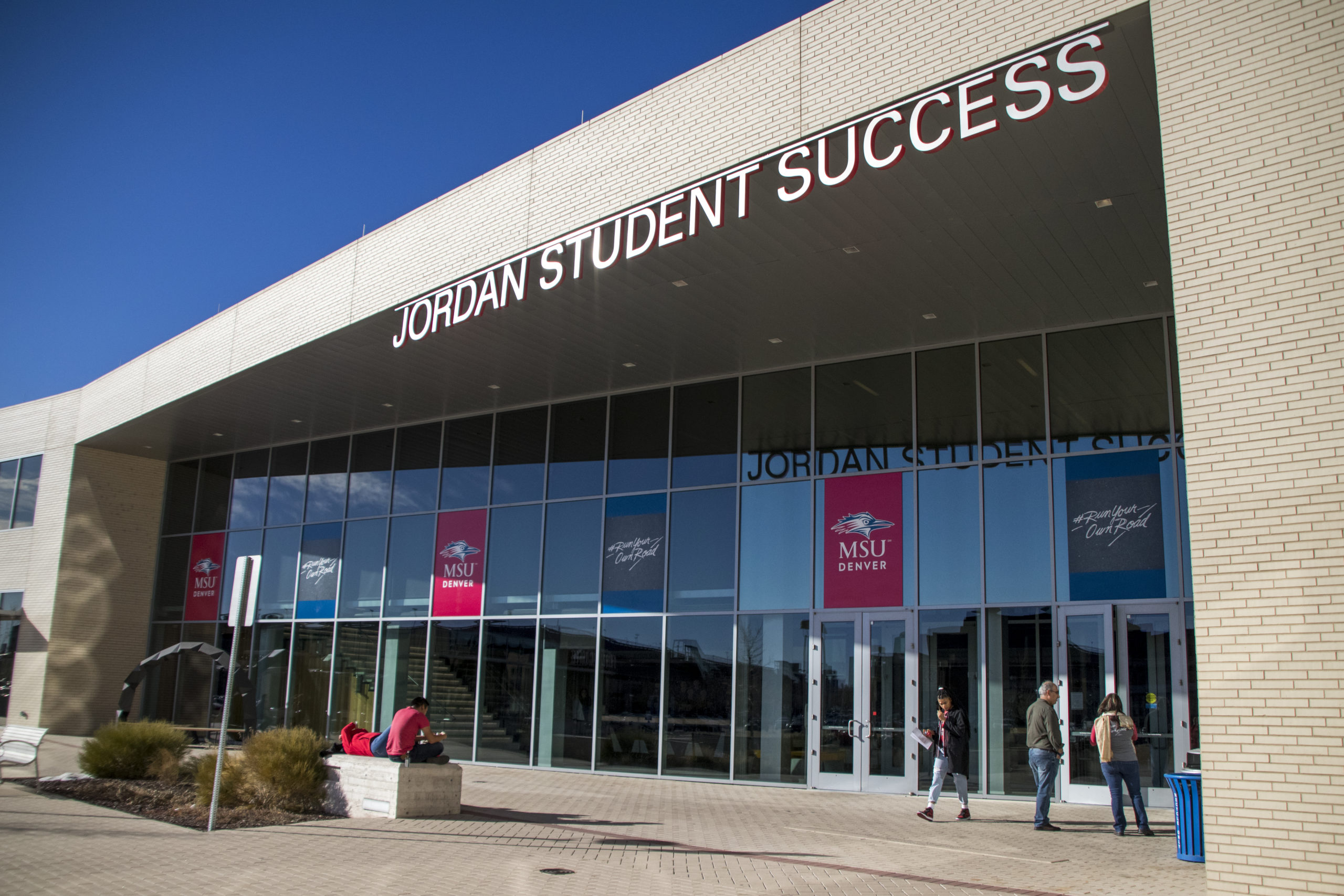
International Student Support serves international students studying on an ‘F’ visa. While our primary purpose is to ensure that you can maintain your legal status while studying at MSU Denver, we are also here to support your personal, academic, and career goals.
Our mission is to create a meaningful experience for international students through cultural exchange, retention-based programming, and holistic support for students’ educational and cultural needs.
On September 14, 2026, a federal judge temporarily blocked the rule that would have replaced Duration of Status (D/S) for F-1 students that would have taken place on September 15th. The prior D/S framework remains in place. Please continue to maintain your status under the D/S framework. The summary below and FAQs on this page remain available and explain the changes if the rules ultimately go into effect.
Duration of Status ends and fixed Admit Until Date (AUD) begins: F-1 students entering or reentering on or after September 15, 2026 receive a specific end date on their I-94 instead of “D/S,” generally the I-20 program end date or four years from the program start date, whichever is shorter, plus a 30-day departure period.
Maximum four-year admission period: Most F-1 students are admitted only up to the length of the program listed on the I-20, capped at four years at a time, so longer programs require a later Extension of Stay.
Post-completion grace period drops from 60 days to 30 days: Students admitted or readmitted on or after September 15, 2026 have only 30 days after program completion or the end of post-completion OPT/STEM OPT to depart, change status, or file certain applications.
Extension of Stay (EOS) required for extra time: Additional time to finish a program, start a new program, or use post-completion OPT/STEM OPT generally requires a DSO-recommended I-20 plus a timely Form I-539 filed with USCIS (or departure and a new CBP admission).
First-year lock-in for undergraduates: Students below the graduate level generally cannot transfer schools, change majors, or change educational level during their first academic year unless SEVP grants an exception for extenuating circumstances (e.g., school closure or disaster).
Graduate-level mobility restricted: Students at the graduate level or above generally cannot change major or educational level at any point during the program, and school transfers require a rare SEVP exception for extenuating circumstances.
No same-level or lower-level programs after completion: An F-1 student who completes a program in the United States on or after September 15, 2026 generally cannot begin another program at the same or a lower educational level.
Transition rules for students already in the U.S. on September 15, 2026: Students present and maintaining D/S on the effective date may remain without an EOS until their current I-20 program end date or valid OPT/STEM OPT end date, not beyond November 14, 2030, and they keep the 60-day grace period if they do not travel.
Special OPT filing window: Current D/S students present on September 15, 2026 who timely file for post-completion OPT or STEM OPT by March 18, 2027 generally do not need a separate EOS with that application.
Travel after the effective date triggers the new rules: Leaving and reentering on or after September 15, 2026 typically produces a new fixed AUD (and the 30-day grace period) even for students who previously held D/S
No. If you are present in the U.S., admitted for D/S, and maintaining status that day you do not need an Extension of Stay just because the new rules start.
You may remain until the date of your current I-20 program end date (place the 60 day grace period) or the end date of any post-completion OPT/STEM OPT that is already valid on September 15, 2026, but not beyond November 14, 2030 (four years plus the old 60-day F-1 grace period).
Yes, if you do not travel or get a new admission/EOS. Your existing D/S I-94 stays in place under the transition rule until you depart and reenter, change status, or receive a USCIS-approved extension.
You can still travel, but CBP will usually admit you with a fixed Admit Until Date on a new I-94, likely the I-20 program end date, capped at four years, plus only a 30-day grace period. So, travel can take you out of the grandfathered D/S rules.
Yes, if you stay in the U.S. and remain under the transition provisions. The 30-day grace period applies to students admitted or readmitted on or after September 15, 2026.
Not if you are present on September 15, 2026 under D/S and timely file the OPT/STEM OPT application by March 18, 2027. If you travel and reenter with a fixed admission date before filing, you must file I-539 together with the I-765. If you apply after March 18, 2027 you will need to file the I-539 as well.
Undergraduates generally cannot change major (or educational level) during the first academic year of the program unless SEVP approves an exception for extenuating circumstances; after that first year, a major change is generally allowed if you otherwise maintain status.
No. Graduate students generally cannot change major, program, or educational level at any point during the current program of study.
Undergraduates generally cannot transfer during the first academic year and must finish that year at the school that issued the initial I-20 used for entry, unless SEVP grants an exception. Graduate students generally cannot transfer at any point unless SEVP approves an exception for extenuating circumstances (examples given so far are rare events such as school closure or a prolonged disaster).
If you complete a program on or after September 15, 2026, you generally cannot begin another F-1 program at the same or a lower educational level. Moving to a higher level (bachelor’s to master’s, master’s to Ph.D.) is still allowed. Degrees completed before September 15 do not trigger this bar.
If you graduate and are changing levels (ex: undergraduate to graduate), you will need to file an EOS or travel for re-entry.
Maintaining status starts before you arrive. Remember to enter the U.S. on your F-1 visa. You cannot enter earlier than 30 days before your program start date. Once you are here and have attended orientation, make sure you do the following:
If you cannot maintain full-time status, in person, please notify International Student Support immediately. Do not drop a class without first speaking with your DSO even if your academic advisor has given you approval. Students must get ISA/DSO approval before withdrawing from classes. Falling below full-time unapproved will cause a student to be out-of-status. Out-of-status students will be terminated.
Full-time exemptions or Reduced Course Load: A student may be approved for less than full-time under certain circumstances. Approvable reasons are:
For more information on Reduced Course Loads, please contact a DSO or see the Study in the States site.
| Form | Form Details |
|---|---|
| SyncFlex In-Person Agreement – (only MBA students) | The MBA program lists classes as SyncFlex. SyncFlex courses offer in-person and synchronous online versions of the instruction. Typically, you have the flexibility to switch between learning environments throughout the course. However, international students must attend these classes in-person. This form confirms with the student and instructor that international students will be attending in-person.
NOTE: International Students enrolled in 8 week courses need to enroll in two in order to fulfill their status requirements if not enrolled in a 16 week in-person course.
|
| New International Student ID Photo | Use this form for new incoming F-1 students. So, ISS can prepare your Student ID. F-1 Students will get their ID during the Welcoming and DSO Check-in. |
| New International Student Check-In Form |
This form is used for new incoming F-1 students. ISS needs this information to register your I-20 in SEVIS. |
| I-20 and Program Extension Application for F-1 Students | F-1 students should complete this form if they need more time to complete their degree than listed on their I-20. The form should be completed at least 2 weeks before your program end-date on your I-20, but no earlier that the final semester listed on the I-20. The form I-20 cannot be extended after the program end-date has passed. |
| SEVIS Information Update | U.S. Department of Homeland Security (DHS) regulations require all F-1 students to report changes in their U.S. residential address or phone number to their school/program sponsor within 10 days of any change. Students changing their address also needs to complete the AR-11 form with USCIS.
NOTES: Updating your information within the StudentHub does NOT update your SEVIS record. Failure to inform ISS of these changes within 10 days will result in I-20 termination.
|
| OPT Update Form | After your OPT is approved and you have received your EAD card, please submit this form with your employment information. This form is required to update your SEVIS record and maintain your F-1 status while on OPT. |
| Reduced Course Load Request | Full-time enrollment is 12 credit hours for undergraduates and 6 credit hours for graduate students. Exemption reasons are limited by federal regulations. The Department of Homeland Security does not consider risk of course failure, financial or scheduling difficulties to be valid reasons for enrolling less than full-time. |
If you are getting ready to graduate, congratulations!
You have three main options after you graduate.
Please keep our office informed on which path you are wanting to take so that we can make the process as seamless as possible. In addition, all students must apply for graduation!
Leaving MSU
In order to transfer to another institution, we require the following documents:
If you want to invite members of your family that live outside of the U.S. to your graduation ceremony or commencement, please read this carefully.
Note: The following information applies to both domestic and F-1 students.
VISA WAIVER PROGRAM
If your friend or family is from a country that is an approved member of the Visa Waiver Program, please have them read about the requirements to enter the U.S.
TOURIST VISA (B2)
They may need to apply for a visa at a U.S. Embassy. They can do that here. As a part of the application process or during the visa interview, your family members may need to demonstrate two things:
1 . They have adequate funds to support themselves during their stay.
2. They have no intention of remaining in the U.S. after their visit.
In addition to completing the DS-160 Application for a Non-Immigrant Visa, students or family members may need to prepare the following documentation:
Evidence of Funding– If you are providing financial support for your family’s visit, you will need to prove your ability to do that. This is mostly done by showing you have enough funds in your bank account to cover their expenses. If your family members intend to cover their own expenses, they will need to be able to demonstrate that if requested. This is often done through employment verification, a bank statement, or other approved proof of funding.
Evidence of your Status in the U.S.– You may need to verify your status as a student, your graduation date, and, if applicable, that you are maintaining your F-1 status. This is done by providing a current COPY of your I-20 (for F-1 students) and an Enrollment Verification letter. You can request an Enrollment Verification letter are here. (Log in>Click ‘All Enrollment’>Click ‘Obtain an Enrollment Certificate. It will automatically download).
Evidence of Intent to Return– Sometimes your family members must prove that they do not intend to remain in the U.S. A prepaid departure ticket is often adequate, but other documents showing ties to their home country can also be used to demonstrate intent to return home. For example, paperwork showing property ownership, employment, close family ties, or proof of enrollment in school.
Invitation Letter– Students often want an invitation letter written from MSU Denver. MSU Denver does NOT write invitation letters because we are not sponsoring or inviting your family and they do not impact the visa process. With that said, if you want to write a letter of invitation make sure to include your name, the reason you are living in the U.S., the names of the family members who wish to visit, the purpose and length of their visit, and whether you are providing any support for their visit. Below is a simple letter template that has worked for other students.
IMPORTANT NOTE: “Visa applicants must qualify on the basis of the applicant’s residence and ties abroad, rather than assurances from U.S. family and friends. A letter of invitation or Affidavit of Support is not needed to apply for a visitor visa. If you choose to bring a letter of invitation or Affidavit of Support to your interview, please remember it is not one of the factors used in determining whether to issue or deny the visa.” From: https://travel.state.gov/content/travel/en/us-visas/tourism-visit/visitor.html#documentation
Sample Letter
As a student studying in the United States, you may be able to travel during your time of study. If you travel internationally, for annual vacation or during a school break, make sure you take the appropriate steps before you travel to ensure a smooth reentry into the United States. Steps include:
Travel within the United States is also approved during breaks. Again, it is your responsibility to research the areas that you are traveling and any laws that may differ from Denver, Colorado. For travel within the US, we recommend always carrying your passport, I-20, and any documents relevant to your visit.
International Student Support will do our best to inform students of travel advisories in accordance with the Department of State. As always, it is the responsibility of all students to research the areas which they wish to travel. For more information on these advisories, students can visit the U.S. Department of State Website.
Any person who operates a motor vehicle, motor-driven cycle or moped on the public streets & highways in Colorado is required to be at least 16 years of age and have a valid driver license. Many international students choose to get a driver’s license while studying in the U.S. This information applies to any resident alien, not just “students” who will be in Colorado for longer than 90 days (about 3 months).
APPLY FOR A COLORADO DRIVER’S LICENSE OR COLORADO ID
For more information, please see the Colorado Department of Motor Vehicle Page.
UNAUTHORIZED EMPLOYMENT WILL RESULT IN IMMEDIATE TERMINATION OF YOUR SEVIS (Student and Exchange Visitor Information System) RECORD. ALWAYS contact your DSO prior to accepting employment, INCLUDING volunteer work.
Your on-campus employer will provide a work authorization for you to provide to our office. (https://www.msudenverjobs.com/postings/search ) Upon approval, you will be able to work:
If your program offers or requires CPT, please meet with the DSO to discuss your specific situation. CPT must meet certain criteria including being registered for a course congruent with the training. CPT:
NOTE: Students doing CPT can still retain their 20hrs/week on-campus employment.
If you are interested in OPT, please meet with a DSO to discuss your specific situation.
Under certain rare circumstances students may work outside of the reasons listed above. DSO approval is required.
Assistant Registrar-International Student Support: (303) 605-7739
International Student Advisor and Compliance Specialist: (303) 605-5707