
Request Information
Ready to find out what MSU Denver can do for you? We’ve got you covered.
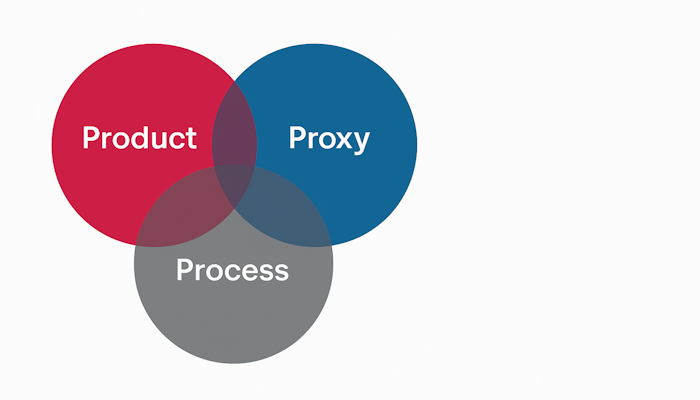
Discussions about generative AI over the last 3 years have driven me to think about writing – and all “content” – as falling into three categories. I think this categorization scheme is useful and can impact nearly every aspect of your courses. Discovering whether a particular piece of content (writing, audio, painting, etc.) is type 1, 2 or 3 leads to fundamentally different interactions with generative AI.
That said, keep in mind that I am not sharing some well-studied scholarly analysis. This reflects my own thinking, which has been sharpened, honed and polished by conversations with colleagues and by brushing up against many excellent discussions I’ve come across.
It may sound redundant to describe content where the content is the goal but stay with me. Often, we truly don’t care who created the content or how they did it. Here are some examples for which the source of the content doesn’t really matter:
The quality of the content matters to me (I don’t want a bad design, or faulty instructions), but its source or the process used are irrelevant.
In many situations, across all human interactions, there are situations where we interpret content in an attempt to understand what is going on inside another person’s mind. The writing, gestures, art, product design, music, etc., matter to us because of what we think it implies about the state of mind of those that created it. Some examples:
In these cases, the reader may care a little about the content (how much they care varies case by case), but mostly they are looking at the content in order to glimpse into the mind of the writer. For example, the instructor isn’t hoping to learn new things about the French Revolution and the Arab Spring, rather, they are hoping to assess the thinking of the student based on what the student has written.
The idea that we learn as we write is at least than 5 decades old (1) (2). Many academics and teachers will say that humans often learn through the process of writing itself. Instead of imagining that we have some knowledge already in place and then we sit down and write out our ideas, imagine that we discover what we think and know during the process of writing. I first heard this idea from colleagues, and I recently used GPT-4.5 to find resources and references about it.
Much like Type 2, the content isn’t really the point. The learning and discovery of our own thoughts and feelings is the whole point. That happens during the process of creating the content.
As with many things, this isn’t as simple as “just three types.” There are situations where even a single bit of content serves more than one purpose, not to mention many cases in which a single larger piece of content has type 1 parts mixed in with type 2 parts. (Consider the address on a get-well card and the personal message written inside). Many types of “authentic assessment” blend together these types. For example, if a visual arts student created a logo for the CTLD as part of a class, that would be type 1 from my perspective, and type 2 from the perspective of their instructor.
Now, consider how the content students generate in your course fits into these three types and then consider how that intersects with your thoughts about student use of generative AI. I’ll use examples from my own teaching, and I am going to do so out of order, because type 2 deserves the bulk of our attention.
I don’t care how this information gets to me. There is no “cheating” here. I just want the (accurate) information. Whatever tool the student uses to answer my questions is just fine. Students may engage in plain and simple dishonesty here, but there is no way for them to engage in academic dishonesty.
Since the process is the point of type 3 content, using other tools will lead to students cheating themselves out of learning. Many instructors, me included, give students credit for doing this kind of work because we want to incentivize it. By doing so we are blending a learning activity with an assessment tool, and generative AI causes a problem with the assessment part.
Almost every “content related question” in academia asks students to create type 2 content. I suspect this is the majority of student generated content (maybe a large majority). Instructors are almost never asking students content questions because the instructor wants to know the answer. Rather, we are trying to assess the knowledge, understanding and abilities of our students, and we do so by asking them to create type 2 content.
Using content as a proxy for understanding has always been flawed. The problems with this system have existed for centuries, with various technologies making the problem worse. A learner might plagiarize. They might ask a friend at another college to write it for them. They might find the problem solution online and memorize it. They might pay $10 per page to get a custom-written academic paper (3). In all of these cases, the premise of type 2 content is broken, and any academic assessment that relies on that content is no longer a good assessment.
Academia has a huge stockpile of “type 2 content assessment methods.” That stockpile had some very consistent leaks that we have mostly ignored, but generative AI blew a giant hole in the tank. In my opinion, academia (MSU Denver is no exception) is not facing the issue with clear eyes, much less dedicating the time, money and effort needed to find a path forward.
Great question. I truly don’t know.
I hope thinking about these three types of content is useful, and I wish I could bring you news of some breakthrough that “fixes” the issues it raises. But for a while now that kind of solution has been conspicuously missing. Maybe I have simply missed it, or maybe it is about to be invented.
For now, I think a frank and realistic view of how generative AI is impacting MSU Denver courses is badly needed. A complex and difficult problem won’t be solved by continuing with business as usual, averting our eyes from what is happening in every corner of our university. I invite conversation and collaboration as we come together to find a way forward, and I hope to learn about happening across the university.
 Generative AI disclosure: After writing this piece I used generative AI to write a first draft of the short “teaser blurb” that went out by email. As mentioned in the text, I also used generative AI to learn more about the origins and details of the “process theory.” Want to know more? Send me an email and we can chat!