
Request Information
Ready to find out what MSU Denver can do for you? We’ve got you covered.
 Dr. Erin Bissell
[email protected]
Plant Ecology, Taxonomy & Evolutionary Biology
 Dr. Christy Carello
[email protected]u
I have a long-term study that has been investigating how rapid growth and development impacts birds in Breckenridge, Colorado. I am also working on a project on the winter-feeding behavior of Northern Shovelers in the Denver metro area. This is a great project for student involvement as the behavior occurs from November to March.
Finally, I am currently wrapping up a study in Costa Rica on how reforestation efforts have provided habitat for neotropical migratory birds. Students that work with me often work on existing projects or we develop new projects that appeal to their own interests in conservation and birds.

Dr. Vida Melvin
[email protected]
Research Website
I use the zebrafish as a model to examine signal transduction and transcriptional regulation of normal development of the head and face. Zebrafish have skeletal elements that are homologous to human facial structures and many of the genes that are involved in human face development have been conserved in zebrafish.
Students in my lab perform all maintenance and care of our fish colony and can learn molecular biology techniques including nucleic acid purification, PCR (RT-PCR and qPCR), cloning, in situ hybridization, genetic modification, and microinjection.
Dr. Helene Ver Eecke
[email protected]
I’m continuously in awe of the complexities of microbes and the impact they have on humans and our planet. It is joyous to make students aware of the microbial world. I love mentoring projects that assess the impressive capabilities of microbes. This includes Bio-Art, bioprospecting, extremophiles, fermentation, social/motile organisms, QA/QC, industrial microbiology, applied environmental microbiology.
 Dr. Andrew Bonhan
[email protected]
Research Website
Dr. Andrew J. Bonham has research interests focused on the understanding and application of nucleic acid-based biosensors for medical and environmental diagnostics. He also develops python-based bio-informatics software to understand and predict aptamer folding and genomic epigenetic methylation patterns. He is a Denver-native, excited to continue his dream of teaching biochemistry, raising scientific awareness, and advancing research.
Dr. April Hill
[email protected]
I primarily teach courses focused on chemical analysis, including analytical, instrumental, and forensic chemistry. I conduct research in the areas of forensic chemistry and archaeometry, as well as in lab accessibility for students with vision impairment.
Dr. Megan Lazorski
[email protected]
Research Information
My research focuses on how light interacts with matter at the most fundamental level. In general, I am always trying to design complexes that enable investigation of the following issues when interacting with light: 1. How are the molecular orbitals affected? 2. How do the electrons move within or between different orbitals in the complex? 3. What spectroscopic and electrochemical techniques can I use to probe these changes? 4. How can I use what I learned from these investigations to design optimal solar energy harvesting and conversion systems? Specifically, my current research group focuses on the design and synthesis of inorganic and organic manganese complexes that exhibit uncommon electron transfer mechanisms or spin states upon interaction with light. The goal of our work is to understand how to manipulate these complexes so that the energy absorbed from the light is retained long enough to be transferred to other chemical processes efficiently. My research group is highly collaborative. We work closely with researchers at the National Renewable Energy Laboratory (NREL) to investigate our complexes using advanced spectroscopic techniques. Teaching and Mentorship: I currently teach General Chemistry, Inorganic Chemistry, Advanced Inorganic Chemistry courses and co-direct the Post-baccalaureate Bridge Programs in the Department of Chemistry and Biochemistry. I serve as a Tier 1 and potential Tier 3 Mentor in the Bridge programs and lead the Post-baccalaureate Program Board of Directors.
Dr. Shalini Srinivasan
[email protected]
My background is in chemistry education, which is a fun combination of several fields (educational psychology, sociology, statistics…) applied in the context of chemistry. This area offers opportunities to measure and understand the factors that impact student learning and success. Students can learn fundamental and advanced statistical tools (depending on their research question), theories that frame student learning and success, qualitative and quantitative research methods. From a broader perspective, students can learn more about assessment and evaluation, (how to know your assessment tool is measuring what it’s supposed to) which are critical in understanding the efficacy of a course, a program, or any initiative that’s implemented in higher education and beyond.
Dr. Ranjidha Rajan
[email protected]
I teach data visualization, programming languages, and algorithms, and my research explores how generative AI, data visualization, and knowledge graphs can transform education and improve student success. Through my projects, I integrate AI-driven insights with interactive dashboards and network analytics to better understand learning behaviors, foster collaboration, and design inclusive, data-informed educational ecosystems.
Dr. Rebecca Bingham-Byrne
[email protected]
My diverse academic background spans natural science, biological sciences, earth sciences, data science, bioinformatics, and public health. My research currently utilizes Geographic Information Sciences (GIS) to explore ecology, animal behavior, biogeography, and infectious diseases, but I want to expand to other areas as well.
Dr. Uwe Kackstaetter (Dr. K)
[email protected]
Dr. K’s University Website
Dr. K’s current interests are in developing various practical approaches as advanced tools for the geosciences, such as field specific gravity testing, automated percolation testers, new wavelength dependent night prospecting tools, improved processes of rock and mineral thin sectioning, field portable cation chromatography and clay mineral analytical processing and computations.
Dr. K is an advocate for undergraduate research and involves his students in various meaningful projects both in Europe and the United States, which have yielded some exciting discoveries, such as a new, accessible kimberlite in the Colorado-Wyoming State line kimberlite district.
Dr. Sarah Schliemann
[email protected]
My research focuses primarily on the role soil plays in climate change and ecological restoration. My current work centers around the impact of the reintroduction of the rainbow scarab beetle (Phanaeus vindex) on soil nutrients and soil bulk density. The rainbow scarab beetle is a dung beetle that once was widespread throughout Colorado; found anywhere there were bison. After European settlers hunted the bison nearly to extinction, the rainbow scarab disappeared as well. The Denver Zoo Conservation Alliance and Denver Mountain Parks with be reintroducing the rainbow scarab beetle to Daniels Park (Douglas County) in the coming years to help manage the bison manure and hopefully improve nutrient cycling and soil conditions.
Dr. Lisa Badanes
[email protected]
My research examines the links between early and current life stress on symptoms of depression and anxiety in adulthood. I am particularly interested in sources of resilience that promote healthy outcomes even in the face of adversity.
Dr. Layton Seth Curl
[email protected]
Dr. Curl examines a range of factors that impact social behavior and prejudice. He also studies human sexuality. Dr. Curl is currently pursing research focused on political psychology and how media viewership impacts persons’ ability to retain general factual and political knowledge.
Dr. Kristen Lyons
[email protected]
am a developmental psychologist who works to improve lives through teaching, research, and opportunity building. My areas of focus include: the development of self-regulation, metacognition and memory; mindfulness training for children and adolescents; and college student development (with a particular focus on supporting the success of first-generation students and students who are parents).
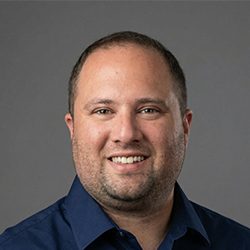
Dr. Alexander Matthews
[email protected]
I am a new lecturer here at MSU Denver. I received my PhD from Utah State University with a degree in Neuroscience. My doctoral research examined the interplay between attention, distraction, working memory, and intracranial drug manipulations within an awake and behaving rodent model of interval timing behavior. I previously instructed Fundamentals of Neuroscience and Sensation & Perception classes. I enjoy hands on labs where students can observe and manipulate the course materials.

Dr. Azure Avery
[email protected]
I am a professor in the Department of Physics and joint appointee at the National Renewable Energy Laboratory (NREL). I teach both lower and upper division physics courses and laboratories and collaborate with researchers in the materials science and chemistry and nanoscience areas. My joint NREL and MSU Denver research interests are focused on studying thermal and electrical transport through thin films such as films of carbon nanotubes, with a specific emphasis on studying materials for renewable energy applications. At, Previous MSU Denver students performed atomic force microscopy to image and measure properties of materials. They have also worked as interns at NREL.
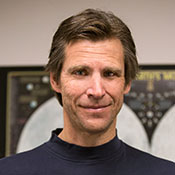
Dr. James Dove
[email protected]
One area of research involves accreting black holes. In particular I’m interested in predicting the X-ray spectra emitted outside the event horizon. A second area of research involves the structure of neutron stars, accounting for both general-relativistic and special-relativistic effects.
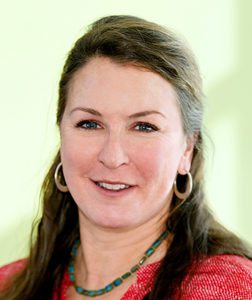
Dr. Janelle Johnson
[email protected]
Colorado STEM Ecosystem
K-12 science, STEM equity, teaching & learning, teacher education. My focus is on increasing access to high quality STEM learning and work opportunities.
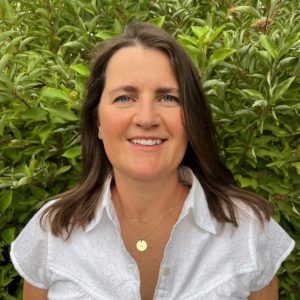
Wildlife Ecology, Invasive Mammalian Species Impact and Control, Transformative Teaching Practices
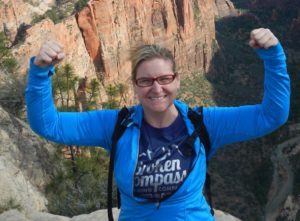
While my background is Sports Medicine, I have been teaching for more than 20 years. Currently I focus on Anatomy & Physiology with an emphasis on critical reading, critical thinking, and logical problem solving. My course is designed to help create a functional foundation in A & P with which one can be successful in upper division courses and have a foundation to begin to puzzle issues they may see on the field, in the clinic, or other internship/work settings.
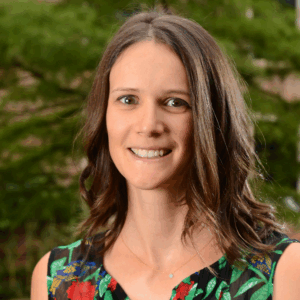
K-5 science, translanguaging, classroom assessment, qualitative methods. A former elementary bilingual science teacher, I am dedicated to working with teachers and students at the intersection of science education, bi/multilingual education and classroom assessment. I use participatory design-based research to put theory to work by collaboratively imaginging, building, testing, reflecting upon and refining tools and routines to support translanguaging pedagogies in science classrooms. Additionally, I am interested in how multi-generational co-design work focused on translanguaging pedagogies in science classrooms can shift teachers’ language ideologies and how they interpret students’ science ideas.
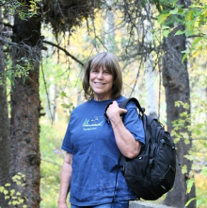
I’m a geologist. My academic specialty is high-resolution event stratigraphy. My industry experience is in exploration for petroleum and minerals, petroleum research, and engineering geology of geohazards. One of my current efforts is to expand sharing of place-relevant geologic information on public lands.