
CyberBridge
Faculty Advisor: Dr. Dan Pittman, Department of Computer Sciences | email: [email protected]
learn more via RoadrunnerLinkThe Departments of Criminal Justice and Criminology, Computer Information Systems and Business Analytics, and Computer Sciences jointly offer the Bachelor of Science in Cybersecurity (B.S. in CYB). The Department of Criminal Justice and Criminology houses and administers the CYB program. The B.S. in Cybersecurity is interdisciplinary which includes aspects of law, policy, human factors, ethics, and risk management. The B.S. in Cybersecurity provides students with the knowledge and practical skills of computer crime, information systems solutions, proper seizure and recovery of computer evidence. Furthermore, the CYB program focuses on understanding criminal cyber-criminal behaviors, preventing cybercrimes, as well as understanding cyber laws governing prosecuting and punishing cybercriminals.
We prepare cybersecurity professionals to deter, detect, contain, and investigate unauthorized use of computer networks and safeguard information assets. The interdisciplinary program offers students education in criminal justice, information systems, and computer science. The cybersecurity program integrates theory and practice, allowing students to gain hands-on experience. Moreover, the cybersecurity program is committed to delivering excellence in teaching, research, service, and community service. As new opportunities are continuously emerging due to persistent cyberattacks targeting businesses and governments alike and a shortage of cybersecurity professionals, our program trains students for employment in local, state, and federal agencies and the private sector.
Metropolitan State University of Denver is a National Center of Academic Excellence in Cybersecurity (NCAE-C) institution. The Cybersecurity, B.S. program has been designated a National Center of Academic Excellence in Cyber Defense (CAE-CD) by the National Security Agency (NSA) from 2022 to 2027. The CAE-CD designation is awarded to regionally accredited academic institutions offering cybersecurity degrees and/or certificates at the associate, bachelor’s and graduate levels. The designation brings with it more opportunities for professional relationships and funding for students, helping them to better prepare for careers in a field where they are desperately needed. “There are about 590,000 unfilled cyber jobs in the U.S., and about 20,000 of those jobs are in Colorado,” said Richard Mac Namee, director of The Cybersecurity Center at MSU Denver.

The B.S. in Cybersecurity program emphasizes hands-on learning experience for its students. Graduates of the program would be job-ready to enter cybersecurity careers.
The B.S. in Cybersecurity program offers daytime, evening, online, and hybrid classes. The flexible course delivery accommodates full-time as well as part time students who are busy working professionals with competing commitments.
The B.S. in Cybersecurity tailors its content and pedagogy to students broadly trained in social/behavioral science and computer information systems as well as computer science. Its curriculum combines the knowledge of combating cybercrime, skills to analyze and manage cyber threats and security, theoretical and analytical comprehension of criminal behavior. Thus, it will respond to rapidly changing cyber workforce requirements.
Arts & Humanities (6 credits)
Written Communication (6 credits)
Oral Communication (3 credits)
Quantitative Literacy (3-4 credits)
*Prerequisite(s): An appropriate score on the mathematics pre-assessment test, or one of MTH 1080 or MTH 1109 or MTH 1110 or MTH 1112 or MTH 1610 with a “C-” or better.
Historical (3 credits)
Social & Behavioral Sciences (6 credits)
Global Diversity (0-3 credits)
For more information, visit General Studies Program.
Unrestricted Electives: The total number of unrestricted electives must be sufficient to meet the University’s minimum requirement to graduate: 120 credit hours.
CYB Elective: Any CYB/CJC course not required for the major.
NOTE: This is a standard list; some courses may or may not be offered each semester, and this list is subject to change without notice.
CYB 4990 Capstone Seminar in Cybersecurity
Prerequisites: CJC 3210, CJC 3420, and CJC 3800; CIS 4550; CSS 3752; Senior Standing 90 hours earned; per instructor’s permission
Description: Students in this course will integrate their knowledge acquired in previous courses on the institutions, policies, and practices of computer information systems, computer sciences and criminal justice. The students will synthesize interdisciplinary learning with exercises that promote critical thinking, including the development of a system plan with a focus on addressing encryption issues and best practices data protection. Students will critique current practices in criminal justice and cybersecurity. Students will evaluate the computer science of detecting infiltrated computer system networks and portable devices, with an extension towards a security conscious system and software development practices and testing activities, which includes discussion of ethical hacking.
University Requirement: Senior Experience
College of Health & Human Sciences 4-Year Degree Plans
Current MSU Denver students, you may review your Degree Progress Report by logging into your Student Hub, click on Web Services–> Degree Progress Report.
The Academic Catalog provides the following information:
Important Note: Students, please make sure that when you select a degree, minor or concentration on the academic catalog website, that you are selecting the link to the correct academic year for you. You may use the drop-down box located at the top right side of the catalog website to select the correct year. For example, if you began your studies at MSU Denver in Fall 2020, Spring 2021 or Summer 2021, you would select the 2020-2021 undergraduate catalog for accurate degree information, NOT the most recent academic catalog or another year. Please also ensure that if you are referring to a degree plan that it matches the year you started taking courses at MSU Denver. If you have further questions about your degree information or degree progress, please reach out to your academic advisor.
This course provides an in-depth exploration of cybersecurity privacy law. You will gain a comprehensive understanding of key legal frameworks governing data collection, use, and security in the digital age. The class will explore prominent federal and state laws, industry regulations, and emerging technologies that impact privacy and cybersecurity. Through case studies, discussions, and practical exercises, students will develop critical thinking skills to analyze legal issues, assess risk, and navigate challenges in this ever-evolving field. This course will give a student a starting point to study for the Certified Information Privacy Professional/United States (CIPP/US) certification.
In this course, students study how to identify fundamental concepts of the Python programming language and how to apply basic programming techniques to solve introductory computing problems. Emphasis is placed on building fundamental programming abilities, applying core concepts such as variables, loops, conditionals, and functions, and developing a structured approach to solving introductory computing problems. Students practice breaking down problems into manageable steps and constructing clear, efficient solutions using Python. Through hands-on practice, students explore real-world applications of Python and observe how programming can be utilized to solve practical, introductory problems across various domains. By the end of the course, students have the foundational knowledge necessary to construct basic programs and adapt their skills to more advanced computational challenges.
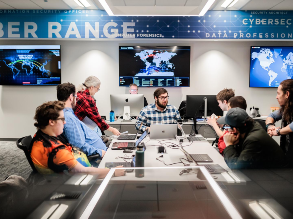
The Cybersecurity Center at MSU Denver is a workforce development resource for higher education cybersecurity efforts in the region and beyond and a resource for all academic programs at MSU Denver. The Center provides program guidance and oversight, general cyber defense information, collaboration and outreach opportunities among students, faculty, other academic units/departments within the University. For more information, please visit The Cybersecurity Center.
To declare a major in Cybersecurity, please complete the Program of Change Study Form.
Office of the Registrar Program of Study Change Form
Faculty Advisor: Dr. Dan Pittman, Department of Computer Sciences | email: [email protected]
learn more via RoadrunnerLink
Faculty Advisor: Dr. Dan Pittman, Department of Computer Sciences | email: [email protected]
learn more via Roadrunner Link
Faculty Advisor: Dr. Ranjidha Rajan, Department of Computer Sciences | email: [email protected]
learn more via RoadrunnerLinkFaculty Advisor: Dr. Denise Mowder, Department of Criminal Justice and Criminology | email: [email protected]
Learn more via WiCyS HomepageStudent Awards
The College of Health & Human Sciences (CHHS) Outstanding Student Awards recognize the academic achievements of graduating students. These awards are presented to students who demonstrate emerging professional capabilities and potential for contributing to their professions and society.
Congratulations!
Cybersecurity, B.S.
Cybersecurity Competitions
An MSU Denver cybersecurity team earned first place in the Strategist category at the 2026 CYBER RECon National Competition hosted at Fort Meade, Maryland, by U.S. Cyber Command.
Cyber Research and Education Conference is an annual student research competition and symposium hosted by U.S. Cyber Command’s Academic Engagement Network (AEN).
Led by Jeffrey London, Ph.D., and undergraduate student Matthew Bopp, the team competed against universities and law schools nationwide with its 30-page legal analysis on cybersecurity and free speech titled “Freedom of Speech and MDM: Misinformation, Disinformation, and Malinformation.” The paper also earned Bopp a personal invitation to apply to the University of Maryland School of Law.
The Denver chapter of ISACA, a global professional association focused on IT governance, cybersecurity, and risk management, recently hosted its annual case study competition for college students. This year’s theme explored the growing impact of AI-powered cyberattacks across sectors such as healthcare, finance, education, and smart technologies.
Students from Dr. János Füstös‘ course, CIS 4500 Information Systems Security Tools and Techniques, submitted research analyzing emerging
threats and proposing practical mitigation strategies. Two teams represented the course:
Competing against teams from universities including the University of Denver (DU), University of Colorado Boulder (CU Boulder), and University of Northern Colorado (UNC), participants advanced through multiple rounds of judging, including live presentations to a panel of industry and academic experts.
Team RoadRunners Jennifer and Jordyn earned an impressive 3rd place finish overall. Jennifer and Jordyn were formally recognized, awarded, and celebrated at the ISACA Denver Chapter’s April conference.
This spring, MSU Denver’s CyberRunners, a student-led competitive cybersecurity team, competed in two national collegiate cyber defense competitions and delivered standout results in the club’s very first season.
In January, the team took part in the Rocky Mountain Collegiate Cyber Defense Competition (CCDC) Qualifier, spending an intense eight-hour day defending a simulated enterprise network against a professional attack team. Competing against 20 teams from across the region, and with every CyberRunner taking part in their first-ever cybersecurity competition, the team placed 10th.
Competing for MSU Denver: Lifu Deng, Eli Earlix, Aayush Lohani, Alexander Morris, Katie Stolle, and Rachel Valdez (team captain).
In March, the CyberRunners returned to competition at the NCAE Cyber Games, the national competition run by the National Centers of Academic Excellence in Cybersecurity, the same NSA-backed program behind MSU Denver’s Center of Academic Excellence designation. The team finished 5th in their bracket, a result that showed just how quickly these students grew over a single semester.
Competing for MSU Denver: Mohammad Ahmadi, Lifu Deng, Logan Garner, Alexander Morris, Lena Ngo, Colton Shelnutt, Katie Stolle, Victor Torres-Corona, Rachel Valdez (team captain), and Teddi Woodmansee.
Both competitions put students into real-time defense of live systems under genuine pressure, building the hands-on skills that cybersecurity employers value most. Congratulations to the CyberRunners on a remarkable first season. We cannot wait to see what they do next.
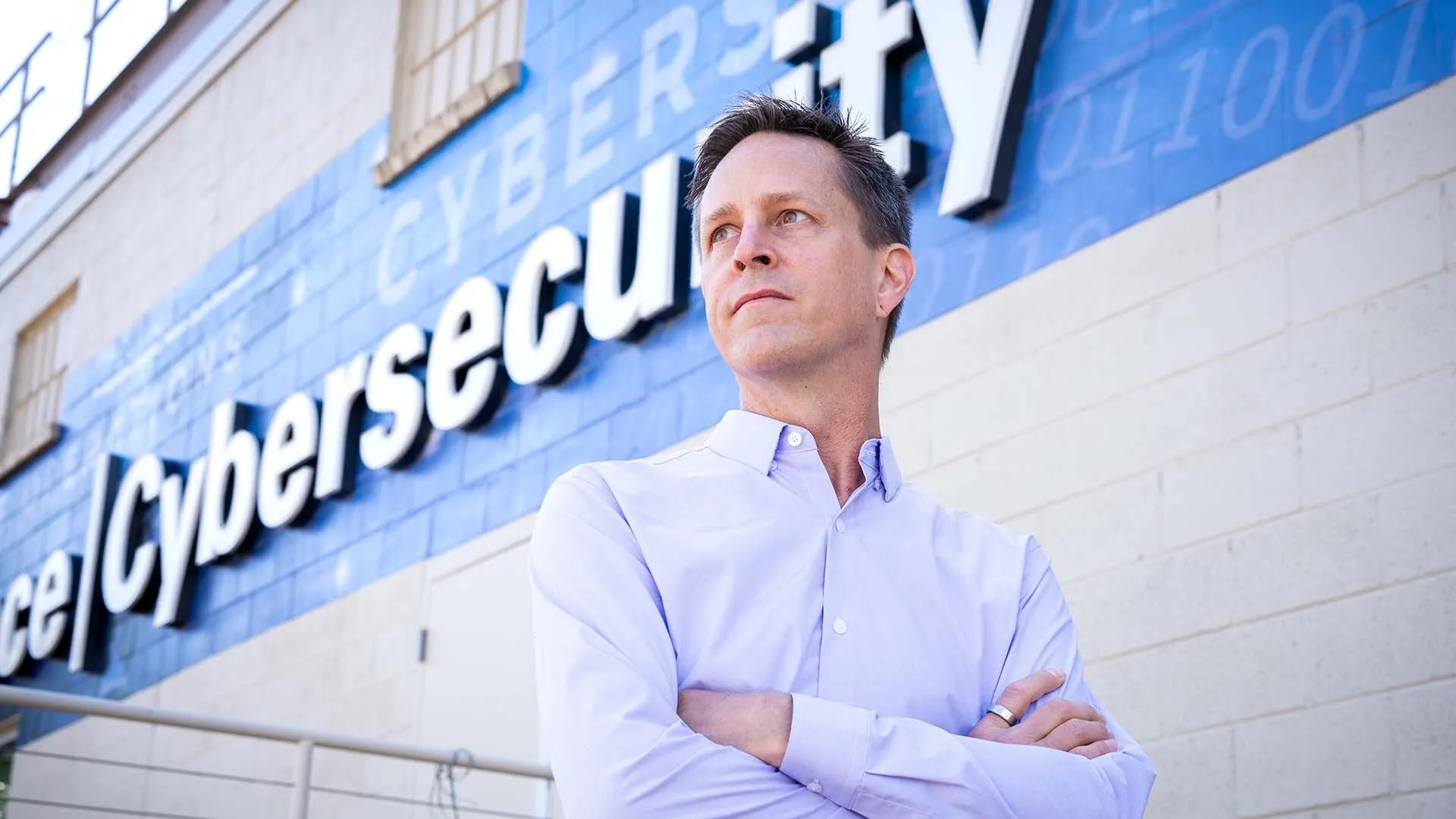
James McColskey is among the students who will receive a Centurion Secured Certificate of Achievement from MSU Denver's Cybersecurity Center. Photo by Josh Geurink
Participants in MSU Denver’s Centurion Secured program are protecting smaller organizations from hackers while gaining real-world experience.
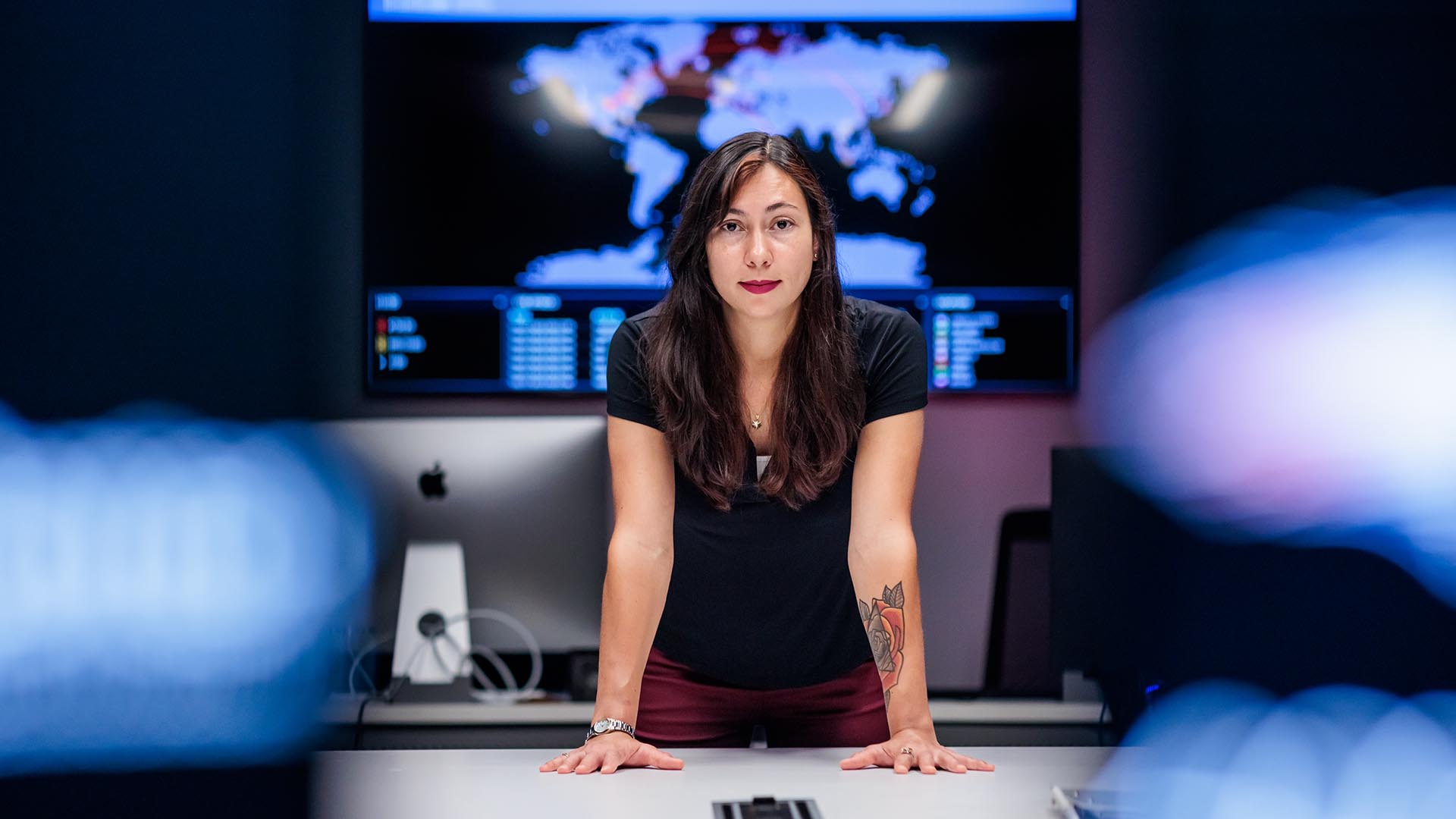
Through the PISCES program, MSU Denver student Monica Ball helps protect civic institutions across Colorado from cyberattacks. Photo by Alyson McClaran
MSU Denver’s PISCES program provides cybersecurity monitoring for organizations throughout Colorado and gives students real-world experience in the process.

With cybercrime soaring, the race is on to train a new generation of digital defenders.

MSU Denver student Soren Singpiel, left, works with alumna Ashley Danielle Aguilar at Lockheed Martin. Photo courtesy of Lockheed Martin
The aerospace, technology and defense corporation is hiring students to support projects in AI, cybersecurity and more.

The U.S. rallies its cyber defenses as the Russia-Ukraine conflict escalates on and off the battlefield.
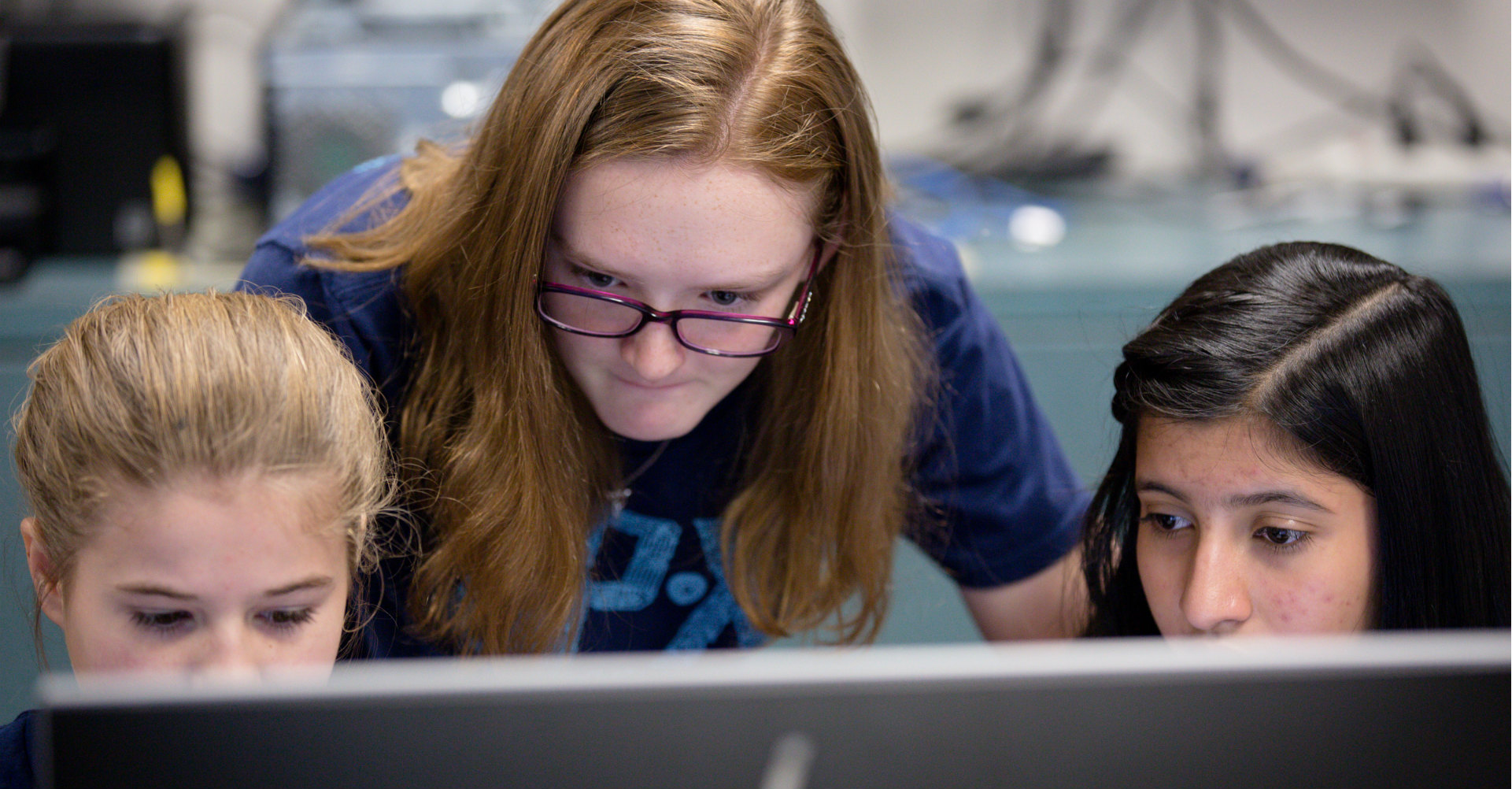
An all-girls squad from D’Evelyn Junior High School code and collaborate their way to the national CyberPatriot competition.
October is Cybersecurity Awareness Month!
Date: Wednesday, October 28, 2026
Time: 10:00 a.m. – 2:00 p.m.
Location: Tivoli Student Union, Turnhalle & Tavern Lounge
900 Auraria Parkway, Denver, CO 80204
Auraria Campus Parking & Transportation Services
Event Details: The Fall Job & Internship Fair is open to all Auraria Campus students/alumni from all majors who are looking for post-graduate opportunities or internships in a wide variety of industries.
Bring several copies of your résumé to connect with employers!
Questions, please contact The Classroom to Career Hub | [email protected]
Date: Thursday, November 5, 2026
Time: 5:30 – 7:00 PM
Location: Tivoli Student Union Turnhalle
900 Auraria Parkway | Denver, CO 80204
Auraria Campus Parking & Transportation
Event Details: Join a fun panel discussion celebrating women breaking barriers and rocking the STEM world together!
The annual Colorado Women’s Hall of Fame (CWHF) Women in STEM event celebrates the achievements of influential Colorado women in science and technology to elevate the visibility of female leadership within the community. This year’s event specifically spotlights distinguished MSU Denver faculty alongside industry pioneers, serving as a powerful platform to inspire and provide real-world role models for the next generation of young women entering STEM fields.
FREE Registration: Students must register to attend.
Dates: March 17-19, 2027
Location: Gaylord Rockies 6700 North Gaylord Rockies Boulevard
Aurora, CO 80019
Event Details: The 13th annual Women in CyberSecurity (WiCyS) Conference brings together women in cybersecurity from academia, research, government and industry. Visit 2027 Annual Conference.
To find a host of exciting events, career support resources, and opportunities to engage with fellow Roadrunners, visit the Classroom to Career Hub (C2Hub) Alumni Relations page.
Academic Advisors
Phone: (303) 615-1099
CONTACT YOUR ADVISOROffice Location
We are located in the Administration Building, Suite 310.
Office Hours
Monday – Thursday 8:30 a.m. – 4:30 p.m.
Friday (Virtual) 8:30 a.m. – 4:30 p.m.
Mailing Address
Department of Criminal Justice & Criminology
Metropolitan State University of Denver
Campus Box 10
P.O. Box 173362
Denver, CO 80217-3362

Connect With Us On Social Media