Metropolitan State University of Denver/NREL Projects
NREL/MSU Denver Project 1 Overview (Renew):
To investigate the photophysical properties of non-heme (nH), Lewis acid (LA) appended Mn(IV)Oxo complexes [(nH)Mn(IV)O]-(LA)x as potential new species relevant to solar energy conversion applications.
Student Slots Available: Two Students (ACS-BP and/or ING-BP)
NREL Sub-Project 1.1. Organic synthesis of nH ligand architectures:
Students on this project will investigate how different ligand modifications affect the energetic landscape of the [(nH)Mn(IV)O]-(LA)x complexes. Through this project, students will learn organic techniques, approaches to organic synthesis and mechanisms, and structural characterization techniques for organic complexes such as nuclear magnetic resonance spectroscopy and mass spectrometry. Since these complexes will be used to synthesize [(nH)Mn(IV)O]-(LA)x complexes, students will also learn how to characterize the free ligands using analytical techniques such as cyclic voltammetry, differential pulse voltammetry, spectroelectrochemistry, and fluorimetry. T3 Mentors: Shailesh Ambre, Ph.D. (MSU Denver) and/or Wade Braunecker, Ph.D. (NREL)
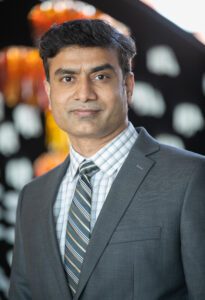
Shailesh Ambre, Ph.D
Wade Braunecker, Ph.D.
NREL Sub-Project 1.2. Inorganic synthesis of [(nH)Mn(IV)O]-(LA)x complexes:
Students on this project will investigate which properties of LAs affect the [(nH)Mn(IV)O]-(LA)x complexes the most. Using ligands from Subproject 1.1, students will learn to use air-free synthetic techniques to generate inorganic [(nH)Mn(IV)O]-(LA)x complexes with different series’ of LAs. Students on this subproject will learn the structural characterization techniques as well as the analytical techniques to characterize the [(nH)Mn(IV)O]-(LA)x complexes. T3 Mentors: Megan Lazorski, Ph.D.
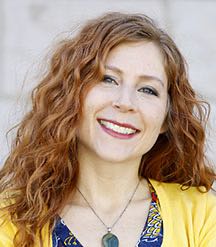
Megan Lazorski, Ph.D.
NREL Sub-Project 1.3. Spectroscopic Investigations on Photoactive [(nH)Mn(IV)O]-(LA)x Complexes:
Students on this project will investigate if the 𝜅5-ligands and LA properties influence the photoactivity in the [(nH)Mn(IV)O]-(LA)x complexes from Subprojects 1.1 and 1.2. To perform this work, students will learn how to conduct experiments and interpret the results of steady-state and time-resolved spectroscopic techniques such as transient absorption spectroscopy (TA), electron paramagnetic spectroscopy (EPR) and transient EPR (tr-EPR), and dark dielectric loss (DDL) and transient dielectric loss (TRDL) spectroscopy. Students on this subproject will learn how to interpret and compile data from these experiments with respect to changes in the energetic landscape of the complexes. T3 Mentors:Melissa Gish, Ph.D., David Mulder, Ph.D. (NREL), and Megan Lazorski, Ph.D.
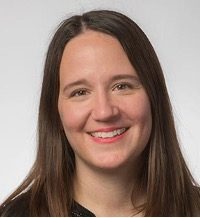
Melissa Gish, Ph.D.
David Mulder, Ph.D.
Megan Lazorski, Ph.D.
Metropolitan State University of Denver Projects
MSU Denver Project 1 Overview:
My work mainly deals with research as part of a Course-based Undergraduate Research Experience (CURE), looking at the evolution of substrate specificity among Malate and Lactate Dehydrogenase Enzymes. If someone wanted to work on this project beyond the course work, there may be opportunities with three different approaches described below.
Student Slots Available: At least one student (ACS-BP and/or ING-BP)
A computational focus to combine sequence analysis and structural modeling to predict mutations that could be suggested for students to make in the experimental lab. This would likely be similar to approaches being used in my computational biochemistry lab course, but looking at additional parts of the family or potentially learning additional analysis tools that we don’t have time to cover in class.
MSU Denver Sub-Project 1.2.
This project would focus on following up preliminary work done as part of the biochemistry lab course to further characterize mutated proteins to gain additional insight into the effect of these mutations. Research performing this work would be involved in measurements of protein stability and binding affinity of substrates or inhibitors. MSU Denver Sub-project 2.3.
There may be some opportunities to engage in chemical education research related to the implementation of a CURE model in the courses I teach.
MSU Denver Project 2 Overview:
These projects focus on the development of simple, convenient bio-sensor DNA probes for the quantitative, rapid detection of proteins and other bio-molecules. This approach simplifies the rational design of sensors directed to bind any target of interest and allows the sensors to have affinity and specificity on the order of natural binding interactions. We have targeted diverse human transcription factors, biological toxins, and bacterial antigens. These bio-sensors represent a convenient, versatile, and readily generalized approach for bio-marker detection.
Student Slots Available: At least one student (ACS-BP and/or ING-BP)
Generation of Improved bio-medical diagnostics. There is pressing need for rapid and field-portable medical diagnostics, particularly for neglected tropical diseases. Electrochemical DNA-aptamer based (E-AB) biosensors present a promising route to address this challenge. In this project, students will learn core voltametric electrochemical analysis techniques, design and characterize custom DNA oligonucleotides, and validate the sensitivity and specificity of electrochemical biosensors against bacterial pathogen targets.
MSU Denver Sub-Project 2.2
Computational approaches to understand the role of allelic methylation in human cancers. Human DNA methylation plays important roles in the epigenetic control of gene expression. In many cancers, recent evidence has demonstrated that such methylation may often occur in an allele-specific pattern in cancers, and yet gold standard analysis techniques do not allow the researcher to differentiate this behavior. In this project, students will apply fundamental Python computer programming and bio-informatic data science techniques to create novel tools and approaches for analyzing and visualizing the role of allele-specific methylation across cancer genomic datasets.
Metropolitan State University of Denver/CU Anschutz Projects
MSU Denver/CU Anschutz Project 1 Overview:
Protein synthesis, also known as translation, is an energetically costly yet essential gene expression process in all of life. Of the three phases: initiation, elongation, and termination, the initiation phase is the most complex and regulated phase. Projects in our lab at MSU Denver and the University of Colorado, Anschutz Medical Campus, focus on the mechanisms and biomolecular structures that regulate eukaryotic translation initiation.
Student Slots Available: At least one ACS-BP student
RNA Viruses Hijack Host Protein Synthesis Machinery: The 5’ and 3’ untranslated regions of many RNA viruses adopt unique RNA structures that recruit 80S ribosomes independent of the methylated guanosine cap structure found on the 5′ end of eukaryotic mRNAs. We study these structure-based mechanisms that often function in the absence of canonical initiation factors, aiming to shed light on fundamental mechanisms of RNA structure and eukaryotic translation initiation.
MSU Denver Sub-project 1.2.
Translation Regulation in Developing Neurons: Neurons are highly polarized cells that develop directionally in response to environmental chemotropic factors. Part of this response involves tethering and releasing translation machinery at axonal growth cones pending the chemotropic signal received. We study the structure and biochemical makeup of these translation complexes, aiming to identify how ribosomes can be manipulated during cell and tissue development.
New Partner Institutions
Other partnerships may be available in the future as funding allows. Check back soon for updates!


 Megan Lazorski, Ph.D.
 Melissa Gish, Ph.D.
 Shailesh Ambre, Ph.D
 Wade Braunecker, Ph.D.
 David Mulder, Ph.D.