
Request Information
Ready to find out what MSU Denver can do for you? We’ve got you covered.
Content Warning: This post discusses government surveillance, protest suppression, anti-LGBTQ+ rhetoric, and personal experiences of trauma and threats of violence. Please take care while reading and reach out for support if needed. MSU Denver students can contact the Counseling Center (303-615-9988) or GITA for confidential support.
The ANTIFA “Designation”
In September 2025, two federal actions prompted intense debate about the boundaries of protest and surveillance in the U.S. (The White House, 2025):
1) A presidential order designating “ANTIFA” a domestic terrorist organization.
2) National Security Presidential Memorandum 7 (NSPM-7), which directs federal agencies to treat certain ideological beliefs—such as anti-capitalism or critiques of gender norms—as potential indicators of extremist activity.
Legal experts, including Wittes (2025) at Lawfare, note that there is no existing federal statute that allows for a formal “terror list” of domestic groups, meaning the ANTIFA designation is largely symbolic—but symbolism matters. It can legitimize enhanced monitoring or enforcement efforts. According to the Armed Conflict Location & Event Data Project (ACLED), an independent, non-profit organization that collects and analyzes data on violent conflict and protest around the world, antifa stands for “anti-fascism”, which is not a movement or organization but instead an ideology (Q&A: Antifa Is Not a Single Group. So What Is It? | ACLED, 2025).
With NSPM-7, the administration has articulated that “organized political violence” may include expressive or ideological markers (The White House, 2025). Critics, including the ACLU, warn that this risks conflating protected speech with security concerns, chilling dissent, academic inquiry, and advocacy (Strum, 2025). In effect, peaceful critique—of economic systems, governance, or gender norms—could be reinterpreted as suspect behavior, particularly for those already marginalized . Journalist Ken Klippenstein (2025) writes that the administration is targeting “individuals and ‘entities’ who NSPM-7 can be identified by any of the following ‘indica’ (indicators) of violence:
Campus Free Speech and Student Activism
The critical question to be asked is what is considered “traditional American views” and who gets to define them? In higher education, concern is rising. Faculty at several institutions report pressure to avoid content on race, policing, capitalism, or gender that might appear “anti-American” (Murphy, 2025). Some have preemptively removed or reworked syllabus materials out of fear of retaliation. Proposals for campus protest around immigration, racial justice, or Palestine protests have faced scrutiny under new surveillance frameworks, as noted in Dr. Monahan’s (2025) paper, Silencing Dissent: Surveillance and Police Actions on University Campuses during Pro-Palestinian Protests.
The ACLU’s open letter to university presidents urges higher-education leaders to refuse federal demands for surveillance or discipline of students exercising protected speech (“Open Letter to U.S. College and University Presidents: Protect Speech on Campus | American Civil Liberties Union,” 2025). Social work programs, whose mission is to teach advocacy and justice, should take this call seriously. While the Council on Social Work Education has not issued a current response on this situation, they did release a statement in 2023 on the importance of academic freedom and their support for social work educators to access this privilege.
As mentioned in our blog last month, some commentators such as the Heritage Foundation (primary authors of Project 2025) have gone further, proposing a new label—Transgender Ideology–Inspired Violent Extremism (TIVE)—framing trans rights advocacy as potential source of violence (Cameron & Couts, 2025). Since then, other organizations such as GLADD have written about the dangers of such labeling and rhetoric. Institutionalized, that labeling could further stigmatize trans communities and subject them to scrutiny, threat, or surveillance. Many social workers, educators, students, and clients are part of those communities; protecting their dignity and worth is not optional but central to our ethical mission.
Social workers can act now by:
“When we are regulated, we are more able to ask questions rather than trust the inflammatory headline. We are more able to organize and act, not give in to the sense of powerlessness.” — Critical Response Team Newsletter, March 4, 2025
Raids, Troops, and “Training Grounds”? ICE in Chicago and the New Push to Federalize Force in U.S. Cities
A predawn federal immigration raid on a South Shore apartment building in Chicago has become a flashpoint for a broader debate about militarized policing and domestic troop deployments (Abonce & Abonce, 2025). Residents, including U.S. citizens and Black Chicagoans, report being zip-tied outside in the cold, children separated from parents, and apartments ransacked; federal officials say the operation targeted criminal suspects and immigration violators (Norkol, 2025). On September 30, 2025, hundreds of federal agents descended on a 130–150 unit building at 7500 S. South Shore Drive using helicopters, drones, flashbangs, and battering rams, teams entered or attempted to enter nearly every apartment, ultimately arresting 37 people. U.S. citizens were among those detained for hours (Hernandez, 2025); witnesses describe Black residents loaded into vans and children taken from their parents before dawn. Local and national coverage: WBEZ, Chicago Sun-Times, South Side Weekly, and Reuters each corroborate core elements of residents’ accounts and the government’s numbers. Congressional committees announced a formal inquiry into the raid.
Meanwhile, the White House has moved to deploy and even federalize National Guard troops to multiple cities, and President Trump, echoed by Defense Secretary Pete Hegseth, recently suggested using U.S. cities as “training grounds” for the armed forces (Finley et al., 2025). The administration is pursuing National Guard deployments (including out-of-state units) in cities such as Portland and Chicago. Courts have split on these moves (e.g., a federal judge blocked deployment in Oregon; an Illinois judge declined to immediately halt deployment pending further hearings), and new lawsuits are moving quickly. See here for a quick breakdown through 10/7/2025:
For social work, and especially for students organizing on campuses, these shifts raise urgent questions about civil liberties, racial justice, and trauma-informed responses in our communities.
Social Work Values: Collective Resistance & Action in Response to What’s Happening
| Value | Why it Matters Now | Our Response |
| Dignity & Worth | Criminalizing dissent dehumanizes individuals. Raids and militarized sweeps dehumanize residents, including citizens and children. | Defend the right to speak, protest, and self-define without fear. Provide trauma-informed support, document rights violations, and center resident voice in advocacy (Hernandez, 2025). |
| Social Justice | Surveillance disproportionately targets oppressed groups. Harms fall disproportionately on Black residents and immigrants; trust in institutions erodes. | Center those most impacted—trans, BIPOC, immigrant, and poor communities. Build Black-immigrant solidarity; partner with local orgs for legal clinics and rapid response (Norkol, 2025). |
| Service & Empowerment | Fear isolates communities and limits organizing. Families face sudden detention, property loss, and displacement. | Provide legal literacy, emotional support, and safety planning for activists. Organize Know Your Rights sessions; mutual aid for material losses; connect to immigration counsel. |
| Integrity & Advocacy | Neutrality in the face of repression is complicity. Advocate for impacted communities and families. | Speak truth to power and model ethical resistance. Educate on PCA/Insurrection Act; support lawful protest; track and challenge overbroad deployments. |
| Competence | Ignorance of law and surveillance undermines practice. Practitioners need literacy in surveillance, immigration, and civil-military law. | Educate ourselves and our students on civil-liberties frameworks. Add modules on Title 10/32, Guard authorities, and campus protest protocols to SWK curricula. |
As we grapple with some of these difficult days, I am compelled to consider the work of Assata Shakur (now an ancestor—rest in power!):
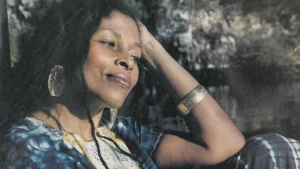
“… resistance against the state (although at times violent) is not synonymous with harm or criminality. State definitions of what is criminal and what is violence often entraps us in cycles where we begin to see each other as the enemy, taking the focus away from the state. We demonize certain types of political action, we become scared of Black youth and police one another, we fight to protect our property instead of embracing collectivism. As Assata also said, ‘Only a fool lets someone tell them who the enemy is.’ We should instead focus our attention on ending state violence and the conditions that allow it.”
Join me in being reminded of Assata Shakur’s affirmation of practicing hope.
An Open Letter to the Social Work Community (by Chris Tyler (they/them) an MSU Denver MSW Student)
To my treasured community of social work students, faculty, and alumni:
I wanted to take the opportunity with this blog’s focus to speak a bit on the implications of authoritarian policies and rhetoric coming from our government and the way these impacts trickle down to individuals. As social workers, we understand the impact of storytelling, particularly on policy change; with that understanding, please allow me to take you on a bit of narrative journey.
I am a non-binary person, an identity that falls under the umbrella term of transgender. I came out in my mid-twenties, first as pansexual and then as non-binary and bisexual (because I did not want to explain both the idea of being non-binary and the meaning of pansexual, not due to a change in my attractions). Almost immediately, I was met with a death threat from my cousin. My mother, blood-related to this family member, did not defend me, acknowledge the threat, or at all make me feel protected, and she maintained a relationship with this person. I had to miss funerals for family members that I had previously had strong relationships with due to the threats, am no longer invited to (or safe to attend) holiday gatherings, and struggle with frequent nightmares in response. Despite multiple, deep attempts to repair this relationship, my mother and I do not talk today—a painful reality. I have found critical chosen family to support me instead, but that support does not take away the pain, loss, and emotional complexity I have experienced in losing the mother I was raised by.
Unfortunately, my activism and queerness have continued to bring death threats my way. Threats online have become increasingly common and violent as social media companies allow violent speech on their platforms. I have reported many threats only to have the comments remain. I have had to change social media accounts with some frequency when the attacks become too common. Additionally, other folks from my past have threatened my life around my activism and identity, some of whom have my phone number and know where I live.
While the death threats feel heavy and instill a vague but constant sense of fear, other pervasive rhetoric can at times hurt even more. Some of that comes from Charlie Kirk saying that all gay people deserve to be stoned to death “under Gods one great law.” Kirk espoused similar or even more violent rhetoric towards other marginalized communities, and while I never support gun violence, I find it very challenging to hear people mourning Kirk. In the immediate wake of his death, MAGA Republicans began feeling emboldened to talk about the transgender population with greater disgust, misinformation, and fear invoking language. These are used to silence us and embolden the beliefs of those who benefit from the continued narrative of white supremacy, racism, and colonialism—practices antithetical to our values as social workers. Personally, I know a trans person who was physically attacked in the days following Kirk’s death, multiple people who have been fired from their jobs, and one person whose personal information was posted to his state Attorney General’s Facebook page, calling him to be fired from his second job (after being fired from his primary work, which had offered him a promotion just the week prior) for simply re-posting a story about Kirk.
The first time I heard about the TIVE status was Friday, September 12th. I had plans for September 13th to attend an event focused on de-arresting immigrants attempting to attend their court dates. While the TIVE status is still not in effect, it puts my mind in a specific place. I recognized that if this status is approved and used, I am putting myself at a new risk. Instead of a weekend in jail for protesting charges, I was now putting myself at risk of being arrested on trumped up charges that would put me at a real risk of imprisonment for an extensive time—possibly in the same way I was attempting to prevent other marginalized folks from experiencing. Seeing the comparisons to the Taliban and the use of the slur “tr*nny” were particularly painful, and when I wake up in the middle of the night, I hear these quotes re-playing in my head.
I recognize that I am in a state of current trauma exposure. I have been encouraged by many in this time to take a break, focus inward, and at times to even quit my activism around this topic. I am told there are other people doing the work, but when I show up in activism spaces, I see dwindling numbers. Folks who encourage me to slow down are not offering to take on the work themselves. I feel I am fighting for my life, my freedom, and my authenticity. I also know I have more privilege than some others in my community and other impacted communities and feel responsible for continuing my fight for their benefit.
The trans community is under specific attack, and I am asking you all to louden your voice in this fight. Whatever lane of activism you reside in, you must increase your calls for attention and action. Use the skills and values of social work to raise awareness and encourage policy development, documentation, and transparency. Report inappropriate and discriminatory behavior on campus and in classrooms (use this link to do so with an anonymous option to the social work department). Challenge folks in classrooms, meetings, coalitions, and supervision who make statements that harm gender-diverse people and ask them to relate their understandings to social work ethics. Additionally, follow up with these folks on why it matters. Name misgendering when you hear it. Challenge the normalized views of trans people. Highlight our fight and encourage real change. Training is not enough. When the Authoritarian government tries to make us quieter and more submissive, we are called to address this based on our values of social justice, autonomy, and dignity and worth of the individual. Trans folks need help from our cisgender peers. How will you pick up some of this work in your area of expertise?
Sources (listed as they appear):
Abonce, J., & Abonce, J. (2025, October 8). Federal agents storm South Shore building, detaining families and children. South Side Weekly. https://southsideweekly.com/federal-agents-storm-south-shore-building-detaining-families-and-children/
Hayes, C. (2025, October 6). Judge blocks Trump from sending National Guard from California to Portland. https://www.bbc.com/news/articles/c740elm70z7o
Content Warning: This post discusses immigration raids, family separations, detention, military deployments, erasure of marginalized histories, and recent attacks on transgender people. Topics include violence, systemic oppression, and threats to civil rights. Please take care while reading and step away if you need to.
Immigration & ICE Raids
On September 8, 2025, the U.S. Supreme Court lifted an order that had limited “roving patrol” stops in Los Angeles. The Los Angeles Times reports the ruling clears the way for federal immigration agents to resume raids that may target people based on factors like language, location, and type of work, raising new due-process concerns and anxiety across immigrant communities. The Times also compiled practical “know your rights” guidance for encounters at home, work, and in public spaces.
In parallel, DHS launched high-visibility enforcement in Illinois (branded “Operation Midway Blitz”) and Massachusetts. Reporting from Reuters and The Washington Post describes heightened ICE activity in the Chicago area and an enforcement “surge” across Massachusetts, moves state and local leaders criticized as fear-driven and potentially indiscriminate.
Two large worksite operations dominated headlines. In Georgia on September 4, federal agents detained 475 workers at Hyundai/LG’s EV battery complex near Savannah, the largest single-site enforcement action in DHS investigations’ history. Follow-up reporting details diplomatic fallout with South Korea, a 2–3 month startup delay at the plant, and disputes about whether some detainees held valid visas. That same day in upstate New York, agents raided Nutrition Bar Confectioners in Cayuga County, detaining 57 people; prosecutors say most are being deported and a handful face re-entry charges. Local and state coverage documents family separations, disrupted schooling, and community responses.
Even as headlines move fast, maps and data help readers contextualize scope and distribution. Newsweek’s national maps track where arrests and operations are concentrated; use these alongside local legal aid networks and university resources to keep students accurately informed without stoking panic. Currently, we have not heard threats of raids in Denver, despite the fact that they are also occurring here.
Why this matters for social work (micro • mezzo • macro)
Where Enforcement is Active
Recent roundups point to operations in: Miami, Los Angeles, Atlanta, New York City, Phoenix, Philadelphia, San Diego (and other Texas cities), with Chicago and Boston seeing new “crackdown” phases. Local conditions differ; check city/county resources and legal networks.
Know Your Rights (quick refresher)
Immigration Enforcement in Denver
As of today (September 15, 2025), the Trump administration is expanding or threatening National Guard deployments beyond Los Angeles and Washington, D.C., with public statements naming cities like Chicago, Baltimore, New Orleans, and Memphis. In D.C., the president asserted federal control in August, mobilizing over 2,000 Guard members and federal agents; he’s now threatening a renewed “national emergency” after disputes with the city over immigration enforcement. The D.C. Guard is unique in falling directly under presidential authority.
Courts are scrutinizing these actions. On September 2, a federal judge ruled the summer deployment of troops to Los Angeles unlawful, barring soldiers from aiding immigration arrests and other civilian law-enforcement functions in California; subsequent proceedings are now playing out at the Ninth Circuit. Beyond D.C. and L.A., the White House has floated or announced Guard deployments to other cities. The administration has signaled plans that could send 1,000 Guard members to Louisiana urban areas pending state approval, and the president said he will deploy Guard troops to Memphis despite local opposition and falling crime trends.
The Legal & Policy Backdrop (in brief)
What NASW is saying
NASW’s national office issued a news release on August 21 stating that deploying National Guard troops to patrol U.S. cities is an authoritarian approach that threatens democracy, emphasizing that public safety is better advanced through housing, healthcare, education, food security, civil liberties, and an adequately funded social safety net. The statement explicitly opposes militarized responses in D.C. and elsewhere. The NASW Metro DC Chapter also condemned the federalization of D.C. police and the Guard “surge,” urging solidarity and community-based support. Related NASW briefs and tools continue to stress due process, racial equity in policing, and trauma-informed community care.
Why this matters for social work (micro • mezzo • macro)
National Guard deployment
In February, the National Park Service deleted the word “transgender” and related references from the Stonewall National Monument website, reducing “LGBTQ+” to “LGB.” Reporters and advocates noted how this erases the roles of trans leaders such as Marsha P. Johnson and Sylvia Rivera in the Stonewall uprising; condemnation followed from historians and LGBTQ organizations. The Stonewall edit wasn’t isolated. The National Parks Conservation Association (NPCA) documented broader web deletions, including removal of the 2016 “LGBTQ America” theme study, from NPS sites. NPCA mirrored the materials to preserve public access and urged the agency to restore them.
By early summer, Interior directed park sites to post QR-code signs asking visitors to report displays that depict “negative” information about Americans, while leadership initiated internal reviews to remove, cover, or rewrite flagged content. Journalists and park advocates warned that this chills historical interpretation and pressures rangers away from evidence-based storytelling. Colorado felt this immediately. New “report negative history” signs appeared at Amache National Historic Site (Granada) and at Sand Creek Massacre National Historic Site, prompting concern among descendant communities and educators who rely on accurate, painful history for healing and learning. The “report negative history” signs and federal website edits send a contradictory signal to descendant communities and to students learning about incarceration, Indigenous dispossession, and LGBTQ civil rights. Social workers can name the harms of erasure and advocate for accurate interpretation as part of community healing.
Scrutiny also expanded to the Smithsonian. NPR toured the National Museum of American History as the White House launched a review of multiple Smithsonian museums; separate reporting noted exhibit changes under that spotlight.
Why This Matters to Social Work
In recent weeks, civil rights groups have raised alarms about reports that the FBI is considering classifying transgender people under a new domestic threat category called “Nihilistic Violent Extremists (NVEs).” This proposal, which has been reported by outlets like Them, suggests that trans advocacy and activism could be flagged as potential security risks. Advocates warn that such framing is deeply stigmatizing, unsupported by evidence, and could open the door to increased surveillance, harassment, and violence against transgender people.
There is no credible data showing that transgender communities are linked to extremist violence, yet this move comes amid a broader national climate of anti-trans legislation and rhetoric. Critics argue that labeling trans people in this way is not about safety but about further criminalizing gender identity and undermining civil rights. Social workers, allies, and community members are called to speak out, uplift trans voices, and ensure affirming spaces remain safe and accessible. Upholding the NASW Code of Ethics—especially our commitments to dignity and worth of the person, social justice, and the importance of human relationships—requires us to resist harmful narratives and stand in solidarity with the transgender community.
How to Support the Transgender Community Right Now
In February 30-year-old Adriana Smith, a Black registered nurse from Georgia, went to Northside Hospital after severe headaches during her ninth week of pregnancy. Despite her instincts, staff gave her Tylenol, ran no tests, and discharged her, despite her partner’s pleas.
The next morning, Adriana was gasping for air. She was rushed to Emory Decatur Hospital, then Emory University Hospital, where a CT scan revealed multiple blood clots in her brain. Tragically, doctors could not save her, and she was declared brain dead.
Yet because the fetus was still developing, Adriana was placed on life support without her family’s (or her living) consent. Confusion around Georgia’s abortion laws led to three months of medical maintenance on her dead body. On Friday, June 13, doctors surgically removed the fetus from her corpse. Adriana was removed from life support on Tuesday, June 17. Her son, Chance, remains in the NICU—born about two months early.
Her mother, April Newkirk, told 11Alive News:
“She’s pregnant with my grandson. … We don’t know if he’ll live once she has him. … We should have had a choice.”
In 2019, Georgia passed HB 481—the LIFE Act—banning most abortions once a fetal heartbeat is detected (around six weeks) and recognizing “fetal personhood.” While the Georgia Attorney General later stated the law did not require life support after brain death, the hospital said it acted “forced” by the law at the time.
Georgia has some of the worst maternal outcomes in the nation. Black women are 2.6× more likely than white women to die from pregnancy-related causes—a gap fueled by medical racism, including dismissing Black women’s pain and self-advocacy.
Historically, Black women were subjected to egregious medical experimentation. J. Marion Sims performed non-consensual gynecological procedures on enslaved women without anesthesia—and today’s Black patients still face structural barriers and neglect.
SisterSong, a reproductive justice collective led by women of color, is suing Georgia over its six-week abortion ban. Executive Director Monica Simpson told Democracy Now!:
“There is a consistent … pattern of Black women being ignored when they say something is wrong with their bodies … This abortion ban has created so many obstacles … It is not cut and dry. It is not black and white.”
Georgia also suffers from maternal-health deserts—over half its counties lack an OB‑GYN—and hasn’t expanded Medicaid, further limiting care access.
Reproductive Justice—a framework created by Black women — centers bodily autonomy, the right to have or not have children, and to parent in safe communities, especially for those most oppressed. SisterSong, based in Atlanta, is working to dismantle reproductive oppression and advance health equity.
Baby Chance remains in the NICU. The family says he’s fighting, but the road ahead is uncertain. Adriana’s older son still believes his mother is sleeping. The family has delayed telling him about his brother.
Their emotional and financial burdens are growing. April Newkirk said:
“All women should have a choice about their bodies. … The same field she worked in is the same field that failed her… A simple CT scan could have saved her life. It just doesn’t make sense.”
In the past week, national attention has largely been focused on the administration’s escalation with Iran. While this is indeed a serious and important issue, it has also overshadowed the continued deportations of undocumented—and at times documented—individuals in the U.S.
You may have recently come across a story about a child welfare agency in Florida allegedly working with ICE to turn over a minor child for deportation. I highly recommend reading the Snopes profile on this story. While this specific incident was not verified—as the child had absconded and was already in the custody of the Office of Refugee Resettlement, to which he was eventually returned—concerns were raised by a Florida lawmaker following inflammatory comments made by Stephen Miller. As of now, the story appears to be unfounded, but we will continue to follow developments closely.
Even if this case proves to be inaccurate, the broader pattern of cruelty continues. Just three days ago in Los Angeles, a 6-year-old boy with leukemia, his mother, and his 9-year-old sister were detained during a scheduled immigration hearing. The family had entered the U.S. seeking asylum and had been granted parole. According to the Huffington Post, the judge dismissed their case, and immediately afterward, all three were taken into custody by plainclothes agents. The family is now being held in a Texas detention center, and a lawsuit has been filed on their behalf.
As a reminder, a weekly solidarity gathering takes place every Monday at the ICE facility in Aurora, CO. These events are open to the public and offer a space to show community support for detained individuals and their families.
Currently, over 200,000 people have been deported, and nearly two-thirds of those deported had no criminal record. Meanwhile, about 58,000 individuals are currently in ICE custody, despite the system being designed to house only around 47,000. Many undocumented parents are being forced to make impossible choices: either bring their U.S. citizen children with them when deported or leave them behind in the United States.
And now, the U.S. Supreme Court has opened the door to potential changes to the Constitution and birthright citizenship, which could escalate these difficult decisions even further. This NPR article provides a helpful overview of what birthright citizenship is and the far-reaching implications of changes to it.
In more recent Supreme Court news, just six days ago the Court also upheld policies that allow for rapid deportations to continue, including the practice of sending people to countries other than their countries of origin.
Additionally, the Trump administration has:
It’s a deluge of policy changes and rollbacks—so constant it’s difficult to know where to focus our energy. But staying informed is essential.
To help, we’ve listed a few of our favorite alternative news sources below for those who want to stay updated but may be feeling overwhelmed by mainstream media.
For immigration-specific reporting, we highly recommend Borderless Magazine, which offers a clear and accessible guide on what you need to know about deportations.
A Bit Fruity with Matt Bernstein: An approachable podcast that analyzes social justice within the context of pop culture and the culture wars (IG: @mattxiv )
5-4 Podcast: “A podcast about how much the Supreme Court sucks.” Analyzes Supreme Court cases both modern and throughout history.
The Upstream Podcast: Contains conversations exploring economics and politics through the lens of building alternative realities and how they relate to our current conditions
AllNews: There’s no such thing as unbiased news. AllSides uses our Media Bias Ratings™ to provide a breadth of perspectives on the day’s news, issues, and opinions.
Ground News: Every side of every news story. Read the news from multiple perspectives. See through media bias with reliable news from local and international sources.
AP News: Accurate, independent, nonpartisan journalism that advances the power of facts.
Also, check out: News Media Across the Political Spectrum
Khaled Beydoun– IG: @khaledbeydoun – A law professor and civil rights activist who posts consistent updates on Gaza.
*Content warning*– some images and videos on this account are disturbing to view and include images of dead or dying people. @Eye.On.Palestine is another similar account that also comes with a content warning.
Taylor Lorenz- IG: @taylorlorenz – An independent journalist who covers internet culture, politics, tech and media
@theTNholler– A Tennessee based media organization that calls light to regional and national issues
Subreddits:
r/DenverProtests- Provides information on upcoming rallies and actions throughout the city and surrounding area as well as videos from people at protests and relevant articles.
r/DenverPolitics– a place for news and discussion about politics in the Denver area
We are living in interesting times, I’ve heard that so many times in the last decade, and it just keeps getting more interesting and scarier. Many of us are asking what we should do?
What about running for local office? Many of our politics and policies that impact the lives of our communities happen at the local level and we believe social workers who embody the values of the field can being an important and unique perspective to the Capital. We should have a seat at the table where policy is written and implemented. We should have a seat at the table when the lives of our community members and clients are on the line. We should use our power to transform our world. Ask yourself, what if?
Imagine the possibilities of what could be and check out these resources to start your campaign!
Hello MSU Denver friends and fellow community!
My name is Maya Stackhouse (they/them), and I am a Concentration Year student in the Master of Social Work program at MSU Denver. I recently attended some of the public demonstrations and protests on June 14th near the Capitol in Denver, Colorado. I want to share with you how my ideas about peaceful protest have changed since my experience that Saturday.
The majority of what I experienced that day between 12:30 and 6:30 PM could be described as “peaceful” — a massive ever-changing gathering of strangers made up of individuals and small groups of friends, people walking together through public streets and spaces, carrying signs expressing their views, joining in chants spontaneously, stopping by booths of organizers and artists, sharing extra water and snacks and cool rags with each other, sharing shade, sharing rage and grief and the longing for hope and some common urgency to protest that day. Simultaneously, there were palpable differences among the crowd. The ages and identities of protestors ranged widely and seemed to trend younger and further left of center ideologically as the day progressed. People showed up that day for very different reasons and with different affiliations to the various movements within a broader hard-to-define movement for liberation. Not everyone there had the same stakes in the game. From my perspective, throughout the day there was this ebbing potential for a kind of “we are all on this crashing plane together” emergency solidarity along with an uncertainty of exactly what to do now that we are all here together and a skeptical protective vetting of one another’s motives for protesting.
I wish I could transmit to you all the details of what I witnessed that day, but the climax of the story is that Denver Police initiated violence upon a crowd of people protesting nonviolently and used heavy “less-than-lethal” but extremely damaging munitions on people’s bodies. Right next to campus, at Colfax and 7th Street, DPD shot me with pepper balls repeatedly in the legs. I was sprayed in the face with multiple burning liquids and gases. I was shoved to the ground repeatedly with my hands up in the air, silent, unmoving. It was extremely painful and traumatic, and also, I am fortunate to be connected to resources to process and recover.
You might have the gut reaction, “Surely protestors instigated this somehow.” I admit that prior to this experience, I had that thought too. I have had a quiet assumption that there was a right way and wrong way to protest, even after experiencing how NYPD responded to protestors in 2020. I still assumed that there was some ideal way to protest without confrontation… a paradox I cannot unsee now alongside the paradox of police being the arbiters of peace. I do not know how to convey what I experienced on June 14th, but I am telling you that there is a difference between the idea and the experience of police violence — I was not breaking any law, I did not have an opportunity to comply with a dispersal order, and in the moment I felt there was no way I could have behaved or complied or altered the optics in any way that would have prevented those Denver Police from enacting violence upon me and fellow protestors. There was no opportunity for peace. Denver Police prevented peace when they opened fire on the people they say they protect and serve.
Anna Tsing, in her 2000 book Friction, critically explained a flawed idealism in the neoliberal view of culture, which assumes that ideas should interact with one another smoothly, with no friction at all. Somehow, we are supposed to imagine a world in which a people and a government should coexist peacefully—even when those people are displeased with that government, and perhaps especially when that government enacts persistent violence on particular people(s) or on a people’s behalf with their tax dollars… But Tsing urged us to relinquish our fearful attachment to smooth ideological interactions. Smoothness between things that are different is impossible, and it actually would prevent different ideas from ever making contact with one another and influencing each other. It is friction—the force of difference between two things making contact—that produces change, produces culture, produces everything. A lack of friction would be a barrier to progress. Perhaps that is what a government would want most, but I am not writing this reflection out of cynicism. I am writing to you out of our shared sense of urgency. We are on a crashing plane together. Do you feel the heartbreak? The solidarity?
So please, do not waste your time criticizing one another’s manners of protest, as if protest were meant to glide smoothly alongside the violence of a government. Call people IN rather than OUT. If 11 million people show up to a protest, that is 11 million different expressions of protest—and also one massive protest. That is almost 3.5% of the population. That is what is needed for massive social change. Feel into that activated part of you that urges to respond, longs for change, yearns for some flavor of freedom. Don’t you see that your neighbor and the stranger share that same desire? There is common ground here that does not depend on centralized force. Direct your critical view and your intelligence to the conditions that allow the possibility of government violence. Recognize that we are working together, even as we approach the work from different perspectives. Could you treat everything you do, think, say, read, eat, buy, or otherwise do as an act of liberation?
We need all of us.
Onwards.
–Maya
We owe a big thanks to Maya for their willingness to share their experiences with our community. Their words are powerful, and they have shown strength and determination for liberation.
Amid chaos and rapid political shifts, it’s vital that we don’t lose sight of why this movement began. We took to the streets in protest of genocide in Palestine and in solidarity with immigrants facing brutal systems of displacement and criminalization.
Yet headlines now fixate on the “pros and cons” of protest, define “riots” and “bad actors,” and sensationalize government infighting. Times of mass mobilization often bring these distractions to the forefront—not to inform, but to distort the truth and shift public attention away from the root causes of protest.
Let us be clear: these are not riots. These are acts of collective resistance, grounded in grief, urgency, and love for community. The word riot has long been weaponized to delegitimize movements for justice—from the Civil Rights Movement to Stonewall, from Ferguson to Standing Rock. What we’re seeing in Los Angeles and across the country continues that legacy: people rising up to demand dignity, freedom, and accountability in the face of oppressive systems.
Social work calls on us to challenge dominant narratives that paint protest as chaos instead of courage. When communities flood the streets, they are not destroying—they are reclaiming space in a system that has rendered them disposable. They are making visible the harm that institutions try to hide. This is not lawlessness. This is democracy in motion.
Whether you are in the streets or not, we all must continue to seek out and elevate the voices of immigrants and examine the United States’ role in the ongoing oppression of Palestinians. Yes, we must talk about police militarization, martial law, and violations of constitutional rights—but those conversations must remain grounded in their full context.
We are not fighting the system just to fight the system. We are fighting because the system is separating families, deporting people without due process, enabling genocide, and silencing dissent. That’s the truth behind the headlines.
Considering Maya’s testimony—and reports from others at the event—we also want to highlight specific safety practices for those participating in direct actions and protests.
Before the police escalated violence at the No Kings Day rally in Denver, multiple protesters reported harassment and threats from drivers who attempted to push their way into intersections where people were marching. I personally encountered a few of these cars. Knowing my own risk tolerance, I joined others in standing in front of one car to prevent the driver from accelerating into the crowd. The driver shouted at us, while two bystanders encouraged him to run us over.
During the confrontation, I reminded myself of four essential practices that have kept me grounded through over a decade of organizing:
After the march ended, I chose to leave the rally. While I felt present and prepared during the protest, I could feel my nervous system asking for rest—and I knew I would be more effective in this movement if I honored that need.
Wherever your activism takes you, have a plan for action—and a plan for rest. We need your voice and your presence—not just today, but for the long haul.
Situational awareness is key. Look around while you are marching, especially at intersections, and be aware of any areas of congestion. Listen for unusual shouting, announcements from law enforcement, directions from protest leaders or for signs of danger, like screeching tires. Be aware of how crowds behave and what may prompt that behavior to change. Be aware of agitators. These may be folks outside your event but may also include folks inside the protest crowd trying to incite aggression.
Communicate with others, especially if there is an escalation. Use chants of short words to deploy directions to others in the crowd. “Link Arms” “Walk Don’t Run” “Peaceful Protest” Keep calm and remind those around you not to panic.
Kettling: A crowd control tactic where police surround a group of protesters and prevent anyone from entering or leaving the area. Kettling is frequently carried out in an unlawful manner, as it is a tactic meant for situations where all kettled persons are engaging in violent or unlawful activity. However, it remains common in peaceful protests. Kettling is a sign of escalation and is often followed by the deployment of less-lethal munitions and arrests. Know your marching route and be aware of locations that restrict movement (e.g. bottlenecking) or only have two exits. Watch for law enforcement who begin to block your options for egress. Communicate loudly, quickly, and concisely with those around you if you believe you are being Kettled. Kettling is difficult to stop unless the group works together to create an exit strategy. Look to experienced protesters for instructions, stay calm, and remember to stay quiet if you are detained or arrested.
Irritants—Tear Gas, Mace and Pepper Balls: If irritants are deployed and you see someone who was hit directly, ask if they want help getting out of the crowd or further from law enforcement action. These irritants are overpowering and can lead to an inability to see, which is usually temporary. The person may need time to recover their senses and composure. Help them get to an area where there is water available so they can begin flushing their eyes. Use water or saline whenever possible- milk does not help more than water and is gross in the summer heat. Depending on what type of gas is deployed, effects will last anywhere from about 30 minutes to a few hours.
If you are hit with an irritant, stay calm. You can expect to experience burning and stinging sensations, intense irritation of the eyes, nose, throat and lungs, difficulty breathing and opening your eyes, and disorientation. If you are hit with a pepper ball, the point of impact will be particularly tender. If you need assistance, shout your needs so those around you can hear. If vision problems persist or skin irritation remains long after exposure, contact your doctor. Take care of yourself in the following days, as being on the receiving end of violence from the state can be jarring and can take time to process.
Rubber Bullets: If “less lethal munitions” like rubber bullets are deployed and you see someone who has been hit, ask them if they are okay. Help them get out of the way to safety. Rubber bullets are meant to be fired at the ground and ricochet into people. They are not intended to be fired directly at an individual. However, individuals are often shot directly, and these munitions can cause serious injury. If the person needs care, look for a medic. Volunteer medics frequently attend protests with necessary supplies and experience. Take special care if someone has been hit in the head. Do not let an individual wander off on their own if you suspect they have a head injury and ensure they are with a trusted party before leaving them. As always, listen to the person who was harmed when providing assistance.
If you are hit: Do your best to stay calm. If you need assistance, shout your needs so those around you can hear. Document any injuries and details of the event and consider contacting an attorney if you believe your rights may have been violated during the event. You may be able to find group resources for you and others impacted by the same event or find legal services that are provided pro bono to protesters. Again, most importantly, remember to take care of yourself in the following days, as being on the receiving end of state violence can be jarring and will take time to process.
Protesting is an act of courage, and protecting each other is part of the work. Whether you’re marching, organizing, or supporting from home, staying informed and grounded is essential. Your safety, rest, and continued commitment to justice are all part of sustaining this movement—for today and for the future we’re building together.
As we prepare this month’s blog, we are once again confronted with violence—this time in Boulder, CO. We unequivocally condemn all acts of violence. True liberation can never come at the expense of another’s freedom; it means all people are free from fear and oppression.
Sadly, we live in a time when meaningful, critical reflection on world events feels increasingly absent in many of our communities—locally, nationally, and globally—resulting in rising violence. Anti-oppressive practice teaches us to live in the gray areas, to hold complexity. In this moment, we ask that you check in on your Jewish and Palestinian friends and neighbors. Walk in solidarity. Condemn violence enacted against both of their communities.
Let’s seek true liberation. Let’s imagine a world where dignity and worth are foundational values in all spaces—and co-create that world together.
You are warmly invited to join us on June 25, 2025, from 1–2 p.m. on Zoom for a space of care and conversation. Together, we will engage in courageous dialogue, acknowledge the hurt and harm felt in our communities, check in with one another, and share resources to help us move forward.
To attend, please contact Dr. Erin Boyce ([email protected]) or Chris Tyler ([email protected]) to receive the meeting link.
If you need support, consider connecting with these local services:
We also recommend this thoughtful podcast:
🎧 A Bit Fruity with Matt Bernstein – Matt, a Queer Jewish liberation activist, shares a nuanced conversation on antisemitism. Listen here
Despite prior communications, deportations continue. International students are still being targeted, and U.S. citizen children are being deported. Over the weekend, we saw violence break out in the Los Angeles area between the community and ICE agents, resulting in the President calling in the National Guard. We will continue to monitor the situation. The administration has also floated the idea of suspending habeas corpus, a constitutional protection that requires the government to publicly justify detention. Alarmingly, Homeland Security Secretary Kristi Noem could not define habeas corpus during a Capitol Hill hearing, and Stephen Miller explicitly stated the administration is seeking ways to suspend it. Learn more:
🔗 PBS News: What is habeas corpus and what has the Trump administration said about suspending it?
There is some hopeful news: Kilmar Abrego Garcia has been returned to the United States, and has been charged criminally with several crimes, including human trafficking which appears related to him providing transportation to undocumented immigrants to and from work, we will also continue to follow this story. O.C.G., a survivor of kidnapping and sexual violence wrongfully deported to Mexico without due process, has been approved to return to the U.S. on humanitarian grounds. This is a victory for advocacy. Read more here:
🔗 Trump administration agrees to return ‘wrongfully’ deported immigrant – The Independent
Keep the pressure up. It matters.
We must name the cruelty of family separations. The administration claims to deport only “the worst,” yet we continue to see deportations of parents, spouses, siblings—even children. This week, we learned of Desyi Vargas, whose 4-year-old daughter suffers from a rare condition that can only be treated in the U.S. Doctors have warned that deportation will result in her death within days.
Desyi followed all the rules. She presented at a checkpoint, shared her hardship, and was granted special entry. She is not a threat—just a mother fighting for her daughter’s life. Every child deserves the chance to live, play, and grow. This cruelty feels intentional, and that makes it unbearable—but action can bring us solace.
Stay connected through this blog, join us on Discord, and show up this summer as we resist cruelty and work to transform the world.
We’ve seen some positive developments—some detained students have secured release. Still, Khalil and Ozturk remain detained. Khalil was denied a special request to attend the birth of his child, and when his wife and baby visited in LA, they were denied contact.
🔗 Mahmoud Khalil describes pain of missing son’s birth in latest court filing – The Guardian
Meanwhile, attacks on higher education continue. Harvard has become a key target. The administration is attempting to rewrite history, limit knowledge access, and dismantle institutions. This week, the Librarian of Congress was fired, and efforts were announced to remove workforce disparity data tied to race and gender.
🔗 Can Public Media Survive Trump? – The New Yorker
Archive the truth. Send important data, articles, or stories you believe should be preserved to our team. We will steward these in our archives and share them with others doing this critical work.
As part of our commitment to amplifying student perspectives and fostering critical engagement with current events, this reflection comes directly from a student in our program. It represents one voice among many in our community, rooted in social work values and a call for shared humanity.
With continued intimidation and consequences facing students and universities that publicly oppose the actions of the Israeli government in Gaza, many may feel discouraged from expressing dissent. Yet, we believe this is a moment when silence is not an option. This section offers personal reflections and global updates on the conflict, with a commitment to both social work ethics and constitutional rights.
First, this post does not endorse Hamas or terrorism. It condemns the murder of civilians—including Israeli citizens and ambassadors—and holds that critique of state policies is not inherently antisemitic or “un-American.” Social work values call us to uphold the dignity and worth of all people, and this lens is central to the perspective shared here.
My views have been shaped by my understanding of the Holocaust, the trauma endured by the Jewish people, and the reminder from my father to Never Forget. I believe the state of Israel has the right to exist and to live free from terrorism. And I believe that Palestinian people also deserve the right to live free from genocide, displacement, and violence. I will never forget this genocide either.
For over 11 weeks, Israel blocked food from entering Gaza. While airstrikes claim many lives, starvation has become a mounting crisis. The newly formed Gaza Humanitarian Foundation—backed by both the U.S. and Israeli governments—was created to facilitate aid distribution. However, the organization’s leader, Jake Wood, resigned before the first shipment, citing the foundation’s inability to uphold “humanitarian principles.”
When the first round of aid arrived, desperate civilians rushed the distribution site and were met with gunfire. IDF soldiers killed at least 11 Palestinians and injured dozens more—many trying to collect food, scrap metal, and supplies.
In early May alone, nearly 100,000 Palestinians were displaced. The Israeli Finance Minister stated: “Now we conquer, cleanse, and stay until Hamas is destroyed.” Prime Minister Netanyahu refers to this as “voluntary emigration.” Yet international observers, including many of Israel’s allies, are now calling it what it is: genocide. Israel has also announced it will establish 22 Jewish Settlements in the West Bank, previously Palestinian territory. Trump has promised a “Riviera” in Gaza, planning a real estate investment. However, tensions seem to be growing between Trump and Netanyahu, making the entire situation somehow even more unstable.
Most recently, the Freedom Flotilla, a humanitarian aid mission carrying food, medical supplies, and international peace activists to Gaza, was intercepted in international waters by the Israeli military. Communications with the flotilla were severed, and activists on board—including U.S. and European citizens—were reportedly kidnapped and detained. Human rights organizations, including the Freedom Flotilla Coalition and Jewish Voice for Peace, are demanding their immediate release and accountability for this unlawful act under international maritime law.
➡️ To support the flotilla activists and demand their release, contact your elected representatives, share statements on social media, and follow updates via freedomflotilla.org and Jewish Voice for Peace.
Since the 2023 escalation, high-ranking Israeli officials have made numerous statements that raise serious concern. Below are a few examples. Please be advised: the following language is graphic and dehumanizing.
Recent ceasefire negotiations have again stalled. Hamas requested amendments around U.S. guarantees, aid delivery, and Israeli military withdrawal. U.S. envoy Brett McGurk called these terms “totally unacceptable.” The state of peace talks remains uncertain. A detailed breakdown of the talks is available here.
We reiterate our support and solidarity with all communities that are experiencing violence and condemn all violence. We believe that all people deserve access to human rights, both tangible and intangible. We seek to call on our leaders to negotiate a process towards lasting peace, we call on our leaders to negotiate the return of the Israeli hostages still being held by Hamas, we call on our leaders to ensure access to humanitarian aid in the Gaza Strip, and we call on our leaders to remember that they are a government for the people, by the people, we are a land that values free speech, free assembly, and the pursuit of happiness for all, not a select few.
Tonight, students, organizers, and community members will gather at the Aurora ICE Detention Center to protest the U.S. government’s inhumane detention of immigrants and demand an end to all forms of state-sanctioned violence—from Gaza to the U.S. border. The vigil and protest will begin at 7:00 p.m., and all are welcome.
➡️ To show solidarity, attend tonight’s action, write letters to detained immigrants through organizations like Casa de Paz, and support groups like Raices and Colorado Immigrant Rights Coalition.
The U.S. Department of Education is investigating dozens of universities for antisemitism, including all three institutions on the Auraria campus. The Colorado Advisory Committee has been given a year to evaluate university policies, reporting systems, and administrative responses. Dates for public comment periods will be announced soon.
Although our campus lacks the national recognition of institutions like Harvard—which is facing severe threats, including funding withdrawal and bans on international student enrollment—real consequences are still possible depending on this investigation’s outcome.
Let’s continue to support one another, stay informed, and take action towards a more just and compassionate world.
As a social worker deeply invested in the well-being of our communities, I feel compelled to address the profound implications of the recently passed “One Big Beautiful Bill Act” (OBBBA) on millions of Americans, particularly those reliant on Medicare and Medicaid. This legislation, championed by President Donald Trump and narrowly passed in the House with a 215–214 vote, proposes sweeping changes that threaten the health and stability of our most vulnerable populations. The bill has been vocally opposed by advocates as part of the “GOP agenda of corruption, chaos and cruelty”.
The OBBBA is a comprehensive package that extends the 2017 tax cuts, introduces new tax breaks, expands the reach of the executive branch of government, and significantly reduces spending on social safety net programs. When it comes to social safety nets, key provisions include:
Having passed the House, the bill now awaits deliberation in the Senate. While GOP leaders aim for swift passage, several Republican senators have expressed reservations, particularly concerning the Medicaid cuts and the potential increase in the national deficit, projected to rise by $3.8 trillion over the next decade. The Senate’s response will be pivotal in determining the bill’s final form and impact.
The proposed cuts to Medicaid and SNAP disproportionately affect children, especially those from marginalized communities. Approximately 37% of Medicaid enrollees are children, and the program covers over 40% of all births in the U.S. The bill’s provisions threaten to strip essential healthcare and nutritional support from millions of children and families with young children.
Furthermore, the bill echoes troubling rhetoric reminiscent of eugenic ideologies, subtly reinforcing the idea that only the “strong” are deserving of support and survival. This dangerous framing became especially visible during the COVID-19 pandemic, when public narratives often downplayed the virus’s severity by emphasizing that it “only” posed serious risks to the elderly, immunocompromised, and disabled—implicitly suggesting that those lives were less valuable. The “One Big Beautiful Bill Act” continues this dehumanizing logic by slashing programs like Medicaid, Medicare, and SNAP that are lifelines for disabled people, many of whom are already disproportionately marginalized.
People with disabilities are more likely to be BIPOC, LGBTQ+, low-income—or at the intersection of all three. According to the National Disability Institute, Black and Indigenous people experience disability at higher rates due to the compounding effects of systemic racism and poverty. Additionally, LGBTQ+ adults are more than twice as likely to have a disability compared to their non-LGBTQ+ peers, with transgender individuals reporting some of the highest disability rates.
Transgender Americans, particularly those who are low-income and/or of color, are especially vulnerable under this bill. Medicaid is the largest source of public insurance for transgender people and is critical in covering gender-affirming care, including hormone therapy, mental health support, and transition-related procedures. As of 2023, over 20 states offer at least some Medicaid coverage for gender-affirming healthcare. Rolling back funding or imposing new work requirements would reduce access to this care—even though trans people already face high rates of unemployment, discrimination in healthcare, and barriers to documentation that could prove work eligibility.
These cuts don’t just represent budgetary decisions—they reflect and reinforce systemic violence. They send a message that if you are poor, sick, disabled, queer, or trans, your access to food, housing, and healthcare is conditional—if not optional. As social workers, we cannot allow this message to go unchallenged. We must continue to center the most vulnerable in our fight for justice, care, and community.
However, it’s important to note that reducing funding for Medicaid and Medicare doesn’t just affect individual beneficiaries; it destabilizes an already broken healthcare system. Hospitals, particularly in rural and underserved areas, rely on these programs to fund services. Cuts could lead to hospital closures, reduced services, reduced training, and increased uncompensated care, placing additional strain on healthcare providers and compromising care quality for all. Furthermore, it could lead to cutting staff, which is particularly detrimental to nursing homes and assisted living communities and could lead to a sharp increase in neglect and abuse for older adults and people with disabilities who need daily assistance.
This bill isn’t just a political issue for me—it’s a matter of survival for my family.
My wife, Ryann, was first diagnosed with spinal cord tumors as a teenager. Her first tumors developed in her neck, and despite the fear and uncertainty that came with that diagnosis, she faced it with incredible strength. Years later, as a young adult, she had a recurrence. We thought we had seen the worst of it—until 2021.
That year, after being forced off my employer’s health insurance, who had refused to cover her preventive scans for five years, she got onto a better plan through her employer at the time. That change may have saved her life. The tumors had returned—this time in the thoracic region of her spine. She underwent a tumor resection and radiation that removed the tumors, but it left her with a permanent spinal cord injury.
While we are beyond grateful that she can still walk with the help of a cane, the reality is that she lives with a significant disability. She can’t work. She lives with pain and fatigue every single day. And she relies on Medicare and Medicaid—not just to survive, but to live with some dignity and independence.
These programs pay for her medication. They cover the doctors who know her history and understand the complexity of her care. They pay for medical equipment and therapies that help her maintain mobility. And they pay me—her partner, her caregiver—for the daily support I provide, helping her bathe, cook, manage appointments, and navigate life with a body that has changed dramatically.
If this bill passes and Medicaid is gutted, that support will disappear. The financial blow to our household would be devastating. But it’s not just about money. It’s about stability. It’s about continuity of care. It’s about making sure Ryann doesn’t have to lose the progress she’s worked so hard for because politicians decided her life wasn’t worth the investment.
And we are not alone.
There are millions of families like mine—families navigating chronic illness, disability, and caregiving. Families where one partner works outside the home and the other does unpaid (or barely compensated) care work that keeps their loved ones safe and alive. But there are also millions of disabled individuals trying to survive on their own, without a partner or support system, relying on Medicaid for basic needs like doctor visits, medications, mobility aids, and personal care attendants. Whether you’re part of a caregiving household or navigating these systems alone, the reality is the same: people are already being pushed to the edge by rising medical costs, inaccessible systems, and impossible choices. This bill would only push them further.
This bill threatens all of us. It is built on the belief that if you can’t contribute in a traditional, capitalist way—if you can’t work full-time or live without assistance—you’re a burden. But families like mine know that caregiving is work. That surviving disability is work. That love, interdependence, and community care are the foundation of a just society.
We are not expendable. We deserve better. And we are fighting for it.
The “One Big Beautiful Bill Act” is more than just a budget proposal—it’s a direct threat to the lives and dignity of millions of Americans, especially children, disabled people, marginalized communities, elders, and those living in poverty. By slashing essential safety net programs like Medicaid and Medicare, this bill sends a clear message: if you’re vulnerable, you’re expendable.
As social workers, advocates, and community members, we must not stay silent.
Here’s how you can fight back:
This isn’t just about politics—it’s about people. It’s about the 80 million Americans who rely on Medicaid or Medicare to survive and live with dignity. We still have a chance to stop this bill in its tracks. Let’s show up for each other and demand a country that takes care of all its people—not just the powerful.
On March 4, 2025, the U.S. Supreme Court issued a controversial 5–4 ruling in San Francisco v. Environmental Protection Agency, siding with the city of San Francisco. At the heart of the case was the question of how much authority the EPA (Environmental Protection Agency) holds in enforcing clean water standards set by the Clean Water Act.
Historically, the EPA has regulated what types and amounts of pollutants can be released into public waterways. While entities can apply for National Pollutant Discharge Elimination System (NPDES) permits, they are still required to meet minimum water quality standards.
In this case, San Francisco had existing permits and argued that its practices complied with the standards—despite the presence of human waste, used syringes, toilet paper, and other contaminants being reported in the Pacific Ocean and Mission Creek. A lower court originally ruled in favor of the EPA, which asserted that San Francisco’s discharges still violated environmental protections. But in a surprising turn, the Supreme Court reversed the decision, effectively limiting the EPA’s power to enforce specific cleanup methods and allowing cities more leeway in how they meet federal water quality goals.
This ruling has raised serious public health and environmental justice concerns. Critics argue it opens the door for municipalities to meet the letter of EPA standards without necessarily protecting water quality in practice.
To explore the broader legal implications of this case, the 5-4 Podcast—a show that analyzes Supreme Court rulings from a progressive perspective—features an in-depth breakdown of how this outcome was reached and why it matters.
While San Francisco’s ruling made headlines, local residents in Denver face their own water quality challenges—especially related to lead pipe infrastructure.
Denver Water began a massive effort in 2020 to replace an estimated 64,000 to 84,000 lead service lines throughout the city. The project is expected to take 15 years to complete. In the meantime, households affected by lead piping are provided free water filters through the Lead Reduction Program. Filters are replaced every six months until six months after the pipe replacement occurs, as lead levels may initially spike following construction.
While Denver’s water is generally considered safe to drink, experts caution that budget cuts to the EPA and changes in environmental oversight could jeopardize long-term monitoring and public transparency. Staying informed about these changes is essential to protect the health and safety of our communities.
🌎 Stay updated on environmental policy and your water district’s safety reports.
💧 Visit Denver Water’s Lead Reduction Program to learn more or request a filter.
🎧 Listen to 5-4 Podcast for accessible legal analysis on environmental and civil rights rulings.
As somatic therapist Patricia reminds us:
“You don’t have to be healed to resist.
But you do have to be aware. Aware of how trauma moves through you, and how empire wants you…”
Healing and resistance aren’t linear, and they aren’t solo journeys. Whether you are deep in your own healing or simply trying to stay upright in a world full of grief and injustice—you belong in this movement.
Mark your calendar for June 14, where activists are organizing a protest titled “No Kings Day” to counter former President Trump’s proposed military parade on his birthday. The demonstration aims to reject authoritarianism and celebrate people’s power through joyful defiance.
And don’t miss Eat the Rich: Pride’s Mutual Aid & Variety Show in Denver—a creative collision of queer joy, community care, and radical celebration. Events like these remind us that joy and protest aren’t opposites. In fact, joy is one of the greatest acts of defiance we have.
So, as we continue to speak truth, build solidarity, and fight systems of harm, let’s also dance. Let’s feed one another. Let’s tell stories, laugh loudly, and make space for wonder.
Because we’re not just resisting the world we don’t want—we’re co-creating the one we do.
It’s been about 2 weeks since we’ve sent a newsletter out, for many reasons, mostly just being overwhelmed with the continued pace of information and coming to the end of the semester. As you likely noticed, we are switching the newsletter to a blog to increase access and create a searchable archive. In addition, we want to let you all know that we will be working over the summer; however, less frequently. You can expect at least one newsletter a month over the summer at the end of May, June, and July. Make sure you stay connected, as we will have an event this summer planned by students for students. The event that was held on 4/26 was a meaningful and really good day. We started the day engaging in conversation and some drawing and coloring. Then our arts organizer, Kat Goodman, shared some suggestions for developing language and designs to develop signs related to our passions during this time. Please see the amazing posters that were made that day:

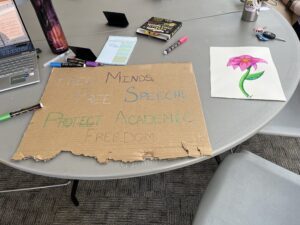
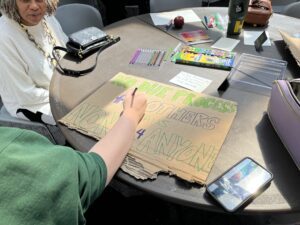
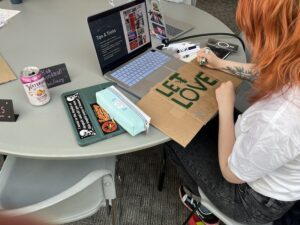
After posters, Maya Stackhouse led us in a somatic healing practice. It’s hard to fully put into words that experience. It was the first time I had joined in a somatic group practice, and it was exactly the thing I needed, I didn’t know I needed. If you weren’t able to join us and have been seeking somatic practice, Dr. AT recorded this video:
Please consider engaging this activity in community with others, even if you jump on a zoom or teams meeting together, somatic healing needs community! Next Chris Tyler, the student liaison to the CRT faculty group provided a short training on safety during protest. Dr. G and I (Erin Boyce) sat next to each other and marveled at how knowledgeable you all are as students, we were taking notes and learning from you all, it just reminded me that we are in this together, and how important it continues to be that we move in solidarity with one another. Finally, we wrapped up our time together in conversation, debriefing the day and talking about some of our hopes for this community. Here is just a small sampling of that conversation, we really hope that you all will join us over the summer so that we can learn more about your hopes and passions, too.
As noted, this team will continue to work through the summer to keep you updated on ongoing policy and practice impacts related to higher education, immigration, the economy, and health & human services (along with anything else that might be relevant to our work as social workers or continued presence in higher education). Those of you about to graduate next week, please join us. This group is open to all BSSW and MSW students, including alumni. If you were hoping for a way to stay connected to MSU Denver post-grad, join us! The intention of the student group is to create a community of social work students who can support one another through safety needs, mutual aid support and taking action to protect vulnerable communities. While protest is a part of our resistance, it is only one part of what is needed. We are needed to provide resources, we can write letters, create post card and phone call campaigns, we can speak out, we can start petitions, we can hold community workshops and build networks, and beyond. The intention of the faculty and staff is to stay engaged, provide information, and support with resources the needs of the students to continue to build this group of social workers in seeking justice.
Please don’t hesitate to reach out to Dr. Erin Boyce, [email protected] or Chris Tyler, [email protected] to find out how to get involved, to share feedback, or to get your questions answered.
So much has happened since the last newsletter that it feels nearly impossible to provide a report on everything here. Therefore, rather than a full narrative as we wrap up this Spring semester, we will provide some overarching context for what’s happening within the realm of higher education, immigration, the intersection of education and immigration, the war in Gaza, and the economy with multiple links and sources that you can take some time to review to become more informed. This link will take you to Presidential Actions – The White House, while I acknowledge that the White House is no longer a place to find archival information, they are keeping a tally and archive of all executive orders signed since January 20, 2025. Please only take in what you can, as you can. You don’t need to consume all this information at one time or even take it all in ever. As noted earlier, as we’ve have now passed the first 100 days of this administration, there is no sign of a slowing down of the continued dismantling of so many programs and resources that we depend on, no slowing down on the censoring of speech and attempts to control information and knowledge sharing from higher education to government (i.e. tax payer funded) research and innovation, and no slowing down on deportations including US citizen children. I’ve heard the excuses, the hypocrisy of it all, it’s head spinning, head exploding at times. And we fight this through our consistency. Don’t let them make you a hypocrite too. Be consistent in all things, get grounded in your values and live them out every day. Don’t waver in your consistency, say what you mean and mean what you say.
We are still waiting for the Trump administration to ensure the return of Kilmar Abrego Garcia, in an interview this weekend Donald Trump stated that he is waiting on the attorney general to advise him on being about to bring him home, despite Trump stating that he could bring him back if he wanted to. It’s inconsistent, it’s dishonest, and it is direct defiance of the courts. I will be honest; this undoing of due process is very concerning and will be watching closely how the courts proceed. It will also be important to watch the case of the judge who was arrested for obstructing federal authorities for allowing an undocumented person to leave her courtroom through a side door. And a retired New Mexico judge, his wife, and daughter who were also arrested on charges of “harboring an [undocumented person].” How does a supreme court hold accountable the person they also deemed above the law when acting within the official capacity of the office of the president? We will soon know the answer to this question, and it will have resounding impacts on the future of democracy and the role of shared governance between the three bodies of our government. It has been reported that the rescinding of student visas is on hold, and that more than 1500 international students have had their visas reinstated, as the state department develops a more robust plan for determining who stays, who goes, and who gets to come in. We will keep an eye on this, in the meantime, on the College Matters podcast last week, they talked about these revocations and their rippling effect. This link will take you to the Student Visa tracker from the Chronicle of Higher Education.
You may have heard that Harvard University is fighting back against the actions of the administration which has made many demands in exchange for reinstated funding streams. Harvard is refusing to allow the federal government to articulate what can and cannot be taught on university campuses and are fighting not just for academic and intellectual freedom, but for the very core right of free speech and free assembly, held in the 1st amendment to the constitution. In addition, higher education is being impacted by executive orders that will impact the way in which universities are accredited, this article provides a good overview How an Accreditation War Could Start. In relationship to accreditation, DEI continues to be a reason for many of the executive orders being issued related to higher education from accreditation to tying university funding to the complete erasure of diversity, equity, and inclusion practices and language from the university space President Trump’s Executive Order Bashes College Accreditors, Blames DEI for Poor Outcomes.
Two weeks ago, in response to the Trump administrations actions against institutions of higher education over 200 university presidents and deans signed a call for constructive engagement, President Davidson was one of those signatures, to read the letter and see the signees, link here: A Call for Constructive Engagement | AAC&U. Here are the policy updates and campus impacts for MSU Denver in the last two weeks:
MSU Denver Impacts
Federal Policy Updates
“Something else that keeps surfacing in conversations with fellow therapists and healers is the tension of being both witness and participant in a world on fire. We’re navigating burnout, grief, systemic violence—and then showing up to hold others through the same storms.
❌ This isn’t a sign that you’re not being an effective therapist. This isn’t a personal shortcoming either…
✅ This is a reflection of living and working within a system that asks us to care endlessly -while most of the time- offering little care in return.
In liberatory work, we aren’t separate from what we’re unlearning. We’re not exempt from contradictions. We may be carrying the same intergenerational trauma, the same weight of injustice, and the same longing for rest that our clients do.
To do this work decolonially means refusing to pathologize our own capacity and instead honoring the relational and political nature of our exhaustion. It means telling the truth: that even our uncertainty, our grief, our stuckness—can be sacred material for healing. So, if you’re tired, you’re not alone. And you don’t need to carry it all alone either.
In community and shameless uncertainty 💛
https://www.seventhselfconsulting.com/decolonize-your-practice
For more of this kind of message, you can read previous Liberatory Letters here.
This year’s Day of Reason observance comes at a time of growing concern. We’ve seen an increase in religious influence in our laws—from attacks on reproductive rights to efforts to bring prayer into public schools and push religious ideology into classrooms. It’s more important than ever for secular voices to speak up, stand together, and show that reason still has a vital role to play in shaping a just society.
So as you raise your lightsaber—or a nightcap—in celebration today, we invite you to also take a moment to reflect, engage, and even take action. Whether that means writing your elected officials, planning a local event, or simply sharing your values with someone new, you’re helping build a more reasoned, inclusive, and equitable future.
To learn more, or to see how others are celebrating, visit: National Day of Reason. Here are some groups making it clear that we need to reverse our current course: 50501, MoveOn, Indivisible, or search for events at Mobilize. And remember: In Reason We Trust.