
Have Questions? We have answers.
Contact UsOnline Gender, Women, and Sexualities Studies B.A. at a Glance
- Format
- 100% onlineSemester-based courses
- Credits and transfer
- 120 total creditsUp to 90 transfer credits may apply
- Real-world experience
- Required internshipComplete it on-site or fully remote
- What you’ll study
- Intersectionality, feminist and queer theory, transnational and decolonial perspectives, research and advocacy
- Career paths
- Nonprofit and advocacy, public policy, education, communications, health and human services
- Colorado tuition and aid
- $326.25 per creditWith COF appliedUp to $1,000 per semester for eligible online majors
What Do You Study in an Online Gender, Women, and Sexualities Studies Degree?
The online Gender, Women, and Sexualities Studies B.A. teaches you to analyze how systems of power shape people’s lives and act on what you learn. Grounded in intersectional, transnational and decolonial scholarship, the program examines how gender, race, sexuality, class, ability and global power structures intersect.
Areas of Study
- Foundations of the Field: Build a working vocabulary in feminist, queer and trans studies and learn how the field developed across activist, academic and global movements.
- Power, Privilege and Intersectionality: Examine how gender, race, sexuality, class, ability and citizenship interact to shape access, opportunity and lived experience.
- Feminist and Queer Theory: Engage major theoretical traditions, from foundational feminist thought to queer theory and decolonial critique.
- Research Methods for Social Change: Learn feminist and queer research methods and apply them to questions you care about in communities, institutions and policy.
- Bodies, Health and Reproductive Justice: Study how gender and sexuality shape health care access, embodiment and movements for reproductive autonomy.
- Transnational and Decolonial Perspectives: Examine how gender and sexuality operate in global contexts, migration and movements for decolonization.
- Social Justice, Activism and Advocacy: Examine the histories and strategies of feminist and queer organizing.
- Gender, Sexuality and Law: Study how legal systems shape gendered violence, victim advocacy, human rights and structural inequality.
Skills You’ll Build
- Analyze systems of power and how gender, race, sexuality, class, ability and citizenship shape lived experience and opportunity.
- Use feminist and queer research methods to examine questions in communities, institutions and policy.
- Apply critical analysis, writing and ethical reasoning to contemporary issues.
- Put theory into practice through advocacy, leadership and a required on-site or fully remote internship.
Faculty Who Specialize in Gender, Women, and Sexualities Studies
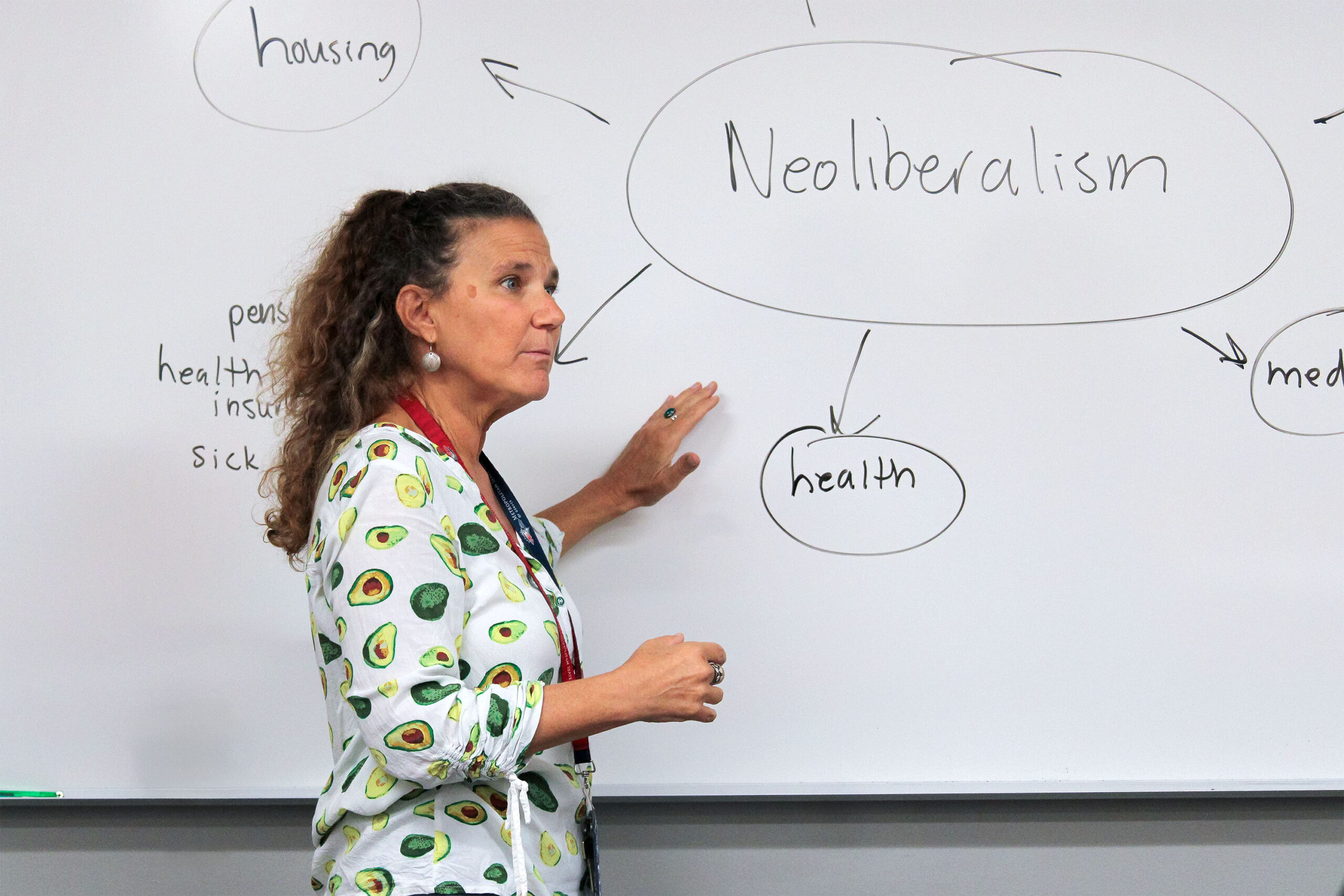
At many universities, gender studies courses are taught by faculty borrowed from other departments. At MSU Denver, the majority of your lower- and upper-division courses are taught by faculty who specialize in gender, women, and sexualities studies. They publish in the field, design the curriculum, and are prepared to mentor majors from your first introductory course through your senior experience.
Their expertise spans transnational sexualities and queer Latin American studies, queer and trans of color critique, decolonial and critical race feminisms, Black feminism and African Diaspora literature, feminist interventions in global politics, and the intersections of gender, religion, and law. Faculty are accessible. Students in the program consistently say they’re treated as collaborators and that faculty work alongside them.
Scholarships for Gender, Women, and Sexualities Studies Majors
Program Specific Scholarship Opportunities
The Gender Institute for Teaching and Advocacy (GITA) sponsors nine scholarships specifically for students in the Gender, Women, and Sexualities Studies program. Awards support students with a range of backgrounds and goals, including activism, financial need, migrant family experience, survivors of violence, and degree completion. At MSU Denver four scholarships are specifically for students with a declared major in Gender, Women, and Sexualities Studies
GITA also offers scholarship tutoring, where staff help you identify and apply for awards inside the department, andacross the university and externally.
Will My Credits Transfer to MSU Denver?
There’s a good chance many of them will. MSU Denver accepts eligible transfer credit from accredited colleges and universities, and many Colorado community college students have access to guaranteed transfer pathways. Your previous coursework could put you well on your way toward finishing your degree.
Questions about how your credits may apply to this degree?
Email us to get help from a real person.

Need More Information About an Online Gender, Women, and Sexualities Studies Degree?
Share your information and we'll reach out via email in about one day.
Request InformationCareers and Outcomes With a Gender, Women, and Sexualities Studies Degree
See Where Your GWS Degree Can Take You
Here are examples of annual median salaries for related professions nationally.
- Social and Community Service Managers
- $78,240
- Human Resources Specialists
- $72,910
- Health Education Specialists
- $63,000
- Social and Human Service Assistants
- $45,120
Source: U.S. Bureau of Labor Statistics, Occupational Outlook Handbook.
(National data, May 2024)
A Gender, Women, and Sexualities Studies degree opens doors across nonprofit, public, education, healthcare, and corporate sectors. Graduates work where critical thinking about power, gender, and equity matters, which means almost everywhere.
Nonprofit and advocacy: community organizer, program coordinator, nonprofit program director, victim advocate
Public sector and policy: policy analyst, legislative aide, government program specialist
Education and communications: sex educator, training and development specialist, content strategist, communications coordinator
Health and human services: patient advocate, reproductive health educator, case manager, LGBTQI services coordinator
Going on to graduate school? Many GWS graduates pursue advanced degrees in social work, law, public health, counseling, and gender studies, applying their analytical foundation to research or professional practice.
Your Online Experience as a Student at MSU Denver
You earn the same degree, learn from the same faculty and have access to the same student services as on-campus students, plus extra support designed for online learners.
- Flexible learning with useful structure: Semester-based courses have deadlines to keep you moving, while online access lets you plan much of your coursework around work, caregiving and other responsibilities.
- Dedicated success coaching: Your Student Success Coach can help you set goals, manage your time, strengthen your study habits and connect with resources when challenges arise.
- Academic and personal support: Access free 24/7 tutoring, online library and writing help, mental health and wellness resources, accessibility services and support for students who are parenting.
- Online advising and career help: Meet virtually with academic advisors and career specialists to plan your degree, explore graduate school and career options, and prepare for your required GWS internship. Complete the internship on-site or fully remote.
- A GWS community wherever you live: Learn with faculty who specialize in the field and classmates who bring experience from advocacy, education, health care, nonprofits and their communities. If GWS programs are limited or unavailable where you live, MSU Denver brings the field to you.

How Much Does it Cost to Complete a GWS B.A. online at MSU Denver, and is There Financial Support?
Low in-state tuition, reduced tuition for many western states, a scholarship built only for online majors, and the freedom to take as many or as few classes as you want. MSU Denver is built to be the affordable online choice, whatever your pace.
Colorado Residents
With the Colorado Opportunity Fund (COF) applied
$326.25 / credit
2026–27 rate, COF applied
What a term costs, tuition & fees included
Part-time (6 credits)
$2,655.92
$2,655.92
Full-time (12 credits)
$4,987.22
$4,987.22
COF reduces per-credit cost for eligible Colorado residents. Most Colorado students qualify.
Outside Colorado (WUE / RIT)
Reduced nonresident tuition for eligible western states
$663.40 / credit
2026–27 WUE/RIT rate
What a term costs, tuition & fees included
Part-time (6 credits)
$4,678.82
$4,678.82
Full-time (12 credits)
$9,033.02
$9,033.02
Western Undergraduate Exchange (WUE) and Roadrunner Interstate Tuition (RIT) lower nonresident cost for students in participating states.
Planning the whole degree? Most online bachelor’s programs are 120 credits. Transfer credits count toward that, so you may have less to pay for than you think.
Up to $1,000
per semester
per semester
Scholarship for fully online majors. Declare a fully online major and you may qualify for up to $1,000 each fall and spring. No separate application required.
Veterans & military: MSU Denver is approved for VA education benefits. Veteran & military student services.
For exact, current figures, see the Undergraduate Tuition & Fees schedule.
Figures shown are 2026–27 rates and are for planning only. All rates are subject to change.
Apply Now For Free
Most applicants are admitted, and you will usually receive your admission decision within a few days.
- Create your application account using your personal email: Start your free application
- Tell us you plan to study fully online to qualify for up to $1,000 per semester in scholarship funds
Admission at a glance
You are typically eligible for admission if you have a 2.0 or higher unweighted high school GPA, are 20 or older with a high school diploma or GED, or have 24 or more transferable college credits.
Request More Information
Tell us a little about you and we’ll follow up by email with information about
- Program details and requirements
- Transfer credits and how they may apply
- Tuition, scholarships, and financial aid basics
- Start dates, deadlines, and next steps
Current student? Get help by emailing [email protected]
Request information
Share your info and we’ll follow up by email.
Loading…
We’ll email you, not call, unless you ask us to.
Frequently Asked Questions
You can totally finish your entire Bachelor of Arts in Gender, Women, and Sexualities Studies (GWS) online and on your own schedule. The program is part of our Gender Institute for Teaching and Advocacy (GITA) and gives you the same empowering, high‑quality classes as the on‑campus version. If you declare the fully online major, you can get up to $1,000 per semester in online‑student scholarships, and most required courses use zero‑cost digital readings.
Your timeline is super flexible and really depends on how many classes you take each term and whether you’re bringing in any transfer credits. Full‑time students starting fresh usually finish in about four years, while part‑time students can stretch things out however they need to fit their lives. And the whole way through, you’ll have a dedicated online success coach making sure your pace feels doable and sustainable.
We’re super transfer‑friendly and really want your previous coursework to give you a solid head start. We can quickly check how your past classes line up with MSU Denver’s gen‑ed and major requirements. And once you’re ready, our transfer advisors will work with you one‑on‑one to make the most of your credits so you can dive straight into your core social justice and theory classes
Because this program builds your skills in critical thinking, research, and ethical reasoning, you’ll graduate ready to lead meaningful change in all kinds of fields. Our grads go on to fulfilling careers as victim advocates, community organizers, human resources JEDI specialists, public policy analysts, and non‑profit leaders. It also gives you a rock‑solid foundation if you’re planning on grad school or professional programs in law, social work, counseling, or public health.
You’ll learn to look at the world through a sharp, critical lens, building advanced skills in intersectional, transnational, and decolonial research methods. The curriculum helps you dig into how gender, race, sexuality, class, and global power structures shape real‑world issues like healthcare access, reproductive justice, and climate change. And the best part is that every major completes a built‑in internship on‑site or fully remote, so you graduate with hands‑on experience and a professional network already forming around you.