Personalized Support
As an MSU Denver Online student, you receive all benefits of in-person students, including 24/7 tutoring and mental health support, plus dedicated Success Coaches for your online journey.

As an MSU Denver Online student, you receive all benefits of in-person students, including 24/7 tutoring and mental health support, plus dedicated Success Coaches for your online journey.
Declare a fully online major and you can get up to $1000 per semester in scholarships that are not need based.
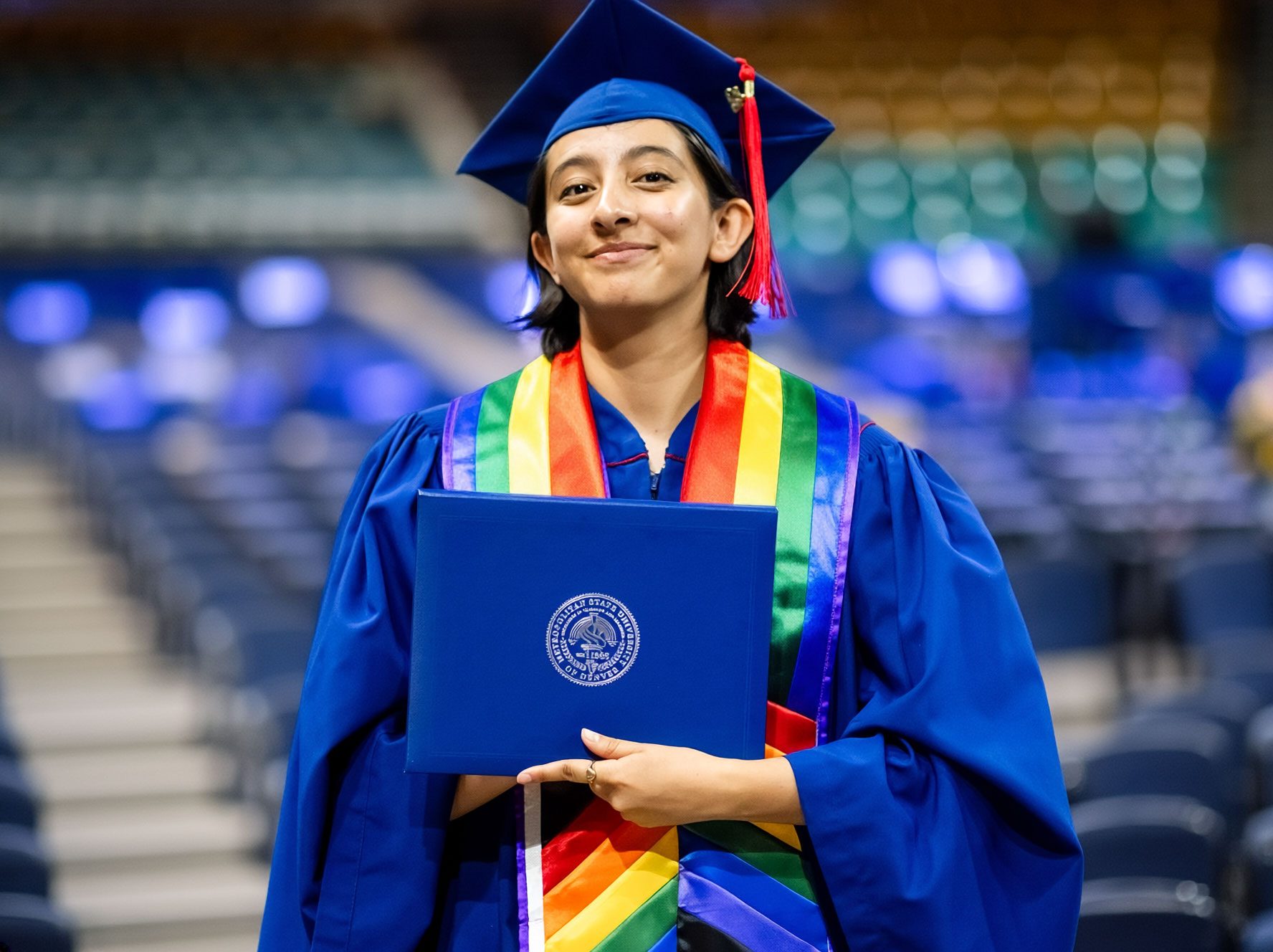
MSU Denver courses are designed with your career in mind and we offer internship and job placement assistance unique to your situation.
The online B.S. in Environmental Sustainability draws on the full depth of MSU Denver’s Department of Earth and Atmospheric Sciences, one of the few undergraduate departments in Colorado that integrates environmental policy, climate science, physical geography, and Geographic Information Systems (GIS) under one roof. The program is built around real problems: land use conflict, climate adaptation, sustainable resource management, and the spatial analysis tools that professionals in those fields use every day. Courses are developed and taught by faculty who are active researchers and working in the field.
This is a STEM-designated degree. The GIS component is substantive. Graduates leave with technical skills that set them apart from candidates with more generalist environmental backgrounds.

Gabrielle Katz, Ph.D., is a professor and chair of the Department of Earth and Atmospheric Sciences. Her research focuses on riparian ecosystems, biological invasions, and ecological restoration across the American West. She has earned more than 15 research grants, produced more than 15 peer-reviewed publications, and her work has been cited more than 1,100 times. Before joining MSU Denver, she held research appointments at Arizona State University and Colorado State University.
Physical Earth Systems – Explore how land, water, climate, and atmosphere interact, and how those systems are changing under human pressure.
Environmental Science Foundations – Study ecosystems, water resources, climate change impacts, and resource use through the lens of applied environmental problem-solving.
Environmental Policy and Planning – Learn how regulations, land use decisions, and planning frameworks shape what gets built, protected, or restored, and who has a say in those decisions.
Environmental Justice – Examine how environmental burdens and benefits are distributed across communities, and what equitable decision-making looks like in practice.
Geographic Information Systems – Build hands-on proficiency in GIS, the core technical skill across planning, consulting, land management, and environmental analysis roles.
Climate Change Science and Adaptation – Move beyond the basics into the science of climate systems, regional impacts, and the planning strategies communities are using to respond.
Geospatial Methods and Applications – Apply GIS to real problems through cartography, remote sensing, web mapping, spatial modeling, and GIS programming.
Global Environmental Challenges – In your senior capstone, integrate everything across a sustained project focused on a complex, real-world environmental problem.

Colorado’s planning agencies, land management offices, federal bureaus, and environmental consulting firms all hire for the kinds of positions this degree prepares you for.
The GIS skills in this degree also open doors in industries that have nothing to do with the environment, including real estate, logistics, public health, and emergency management, anywhere spatial data drives decisions.
Median annual salaries for occupations this degree prepares you for.
Source: U.S. Bureau of Labor Statistics, Occupational Employment and Wage Statistics, May 2024.
Environmental Scientists |
Urban and Regional Planners |
Cartographers and Photogrammetrists
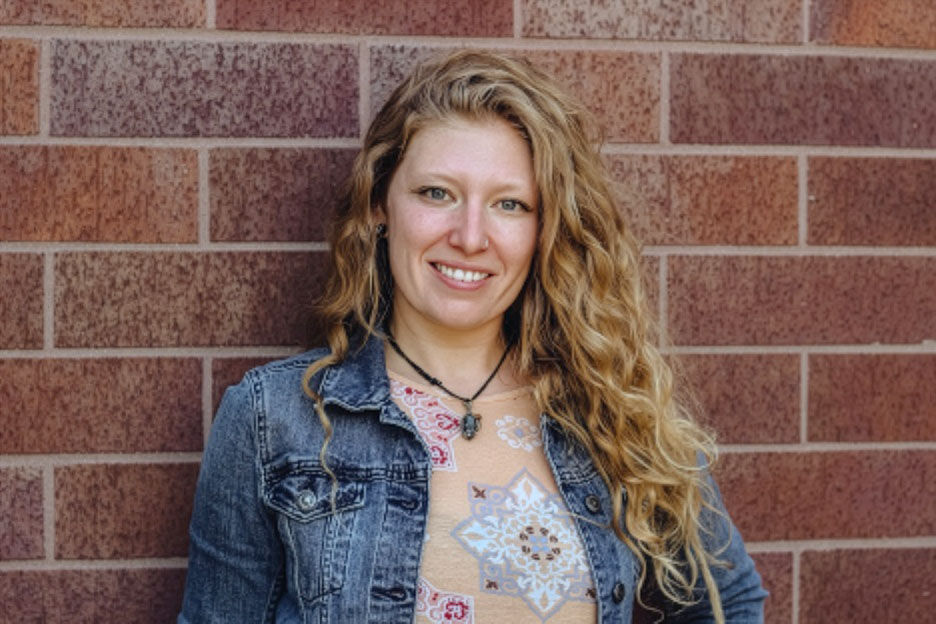
Cassy leads campus-wide climate action, energy, waste, and sustainability strategies across CCD, MSU Denver, and CU Denver. She credits the systems-thinking foundation of her MSU Denver degree with her ability to navigate the social and institutional complexity of a tri-institutional campus, bringing diverse stakeholders together around solutions that are collaborative, realistic, and measurable.
Tell us a little more about yourself and we will reach out to help.
Request InformationAs an online student, you are fully included and fully supported.
Online does not mean alone at MSU Denver. We’re here for you.
Low in-state tuition, reduced tuition for many western states, a scholarship built only for online majors, and the freedom to take as many or as few classes as you want. MSU Denver is built to be the affordable online choice, whatever your pace.
With the Colorado Opportunity Fund (COF) applied
$326.25 / credit
2026–27 rate, COF applied
What a term costs, tuition & fees included
COF reduces per-credit cost for eligible Colorado residents. Most Colorado students qualify.
Reduced nonresident tuition for eligible western states
$663.40 / credit
2026–27 WUE/RIT rate
What a term costs, tuition & fees included
Western Undergraduate Exchange (WUE) and Roadrunner Interstate Tuition (RIT) lower nonresident cost for students in participating states.
Planning the whole degree? Most online bachelor’s programs are 120 credits. Transfer credits count toward that, so you may have less to pay for than you think.
Scholarship for fully online majors. Declare a fully online major and you may qualify for up to $1,000 each fall and spring. No separate application required.
Learn about the online scholarship and other financial aid options
Veterans & military: MSU Denver is approved for VA education benefits. Veteran & military student services.
For exact, current figures, see the Undergraduate Tuition & Fees schedule.
Figures shown are 2026–27 rates and are for planning only. All rates are subject to change.
Most applicants are admitted, and you will usually receive your admission decision within a few days.
Want to see how your credits may apply before you apply? Use Transferology to check how your previous classes may count toward your degree.
You are typically eligible for admission if you have a 2.0 or higher unweighted high school GPA, are 20 or older with a high school diploma or GED, or have 24 or more transferable college credits.
Tell us a little about you and we’ll follow up by email with information about
Current student? Get help by emailing [email protected]
Share your info and we’ll follow up by email.
We’ll email you, not call, unless you ask us to.
Yes, you can earn your Bachelor of Science in Environmental Sustainability 100% online from anywhere in the world. The fully online program features the same STEM‑designated curriculum and expert faculty from our Department of Earth and Atmospheric Sciences as our on‑campus tracks. Plus, when you declare this major fully online, you may automatically qualify for up to $1,000 per semester in dedicated online student scholarships.
Your exact timeline depends on how many classes you take each semester and how many prior credits you bring into the program. A student starting from scratch with a traditional full‑time load can usually graduate in about four years, while part‑time students can space out their courses to maintain a healthy work‑life balance. You’ll also be paired with a dedicated online success coach who helps you map out a clear, realistic semester plan that moves at the pace that works best for you.
We’re incredibly transfer‑friendly and want to make sure you get maximum credit for the academic milestones you’ve already completed. We can see how your previous science, general education, or elective courses line up with MSU Denver’s requirements. Our transfer advisors will work with you one‑on‑one to maximize your transfer hours so you can jump straight into your core sustainability major classes.
Because this degree blends scientific knowledge with practical technical skills, our graduates are highly competitive for impactful careers across both the public and private sectors. You’ll be prepared for roles such as sustainability coordinator, urban and regional planner, environmental policy analyst, land‑use planner, or environmental consultant. The program’s strong technical training also opens doors to well‑paid corporate roles in logistics, emergency management, and resource forecasting.
You’ll build real technical skills in climate science, sustainable resource management, and environmental policy, with a strong emphasis on GIS. You’ll learn to map, visualize, and analyze spatial data to solve real‑world problems, giving you a data‑driven edge over candidates with a standard environmental background.
This program is built for busy professionals, military students, and anyone balancing work or family responsibilities. Because classes are fully asynchronous, there are no required live login times; you can study, review policy maps, or complete GIS assignments whenever it fits your week. You can keep earning a living and stay rooted in your community while steadily building a career that helps protect the planet.