
Have Questions? We have answers.
Contact Us
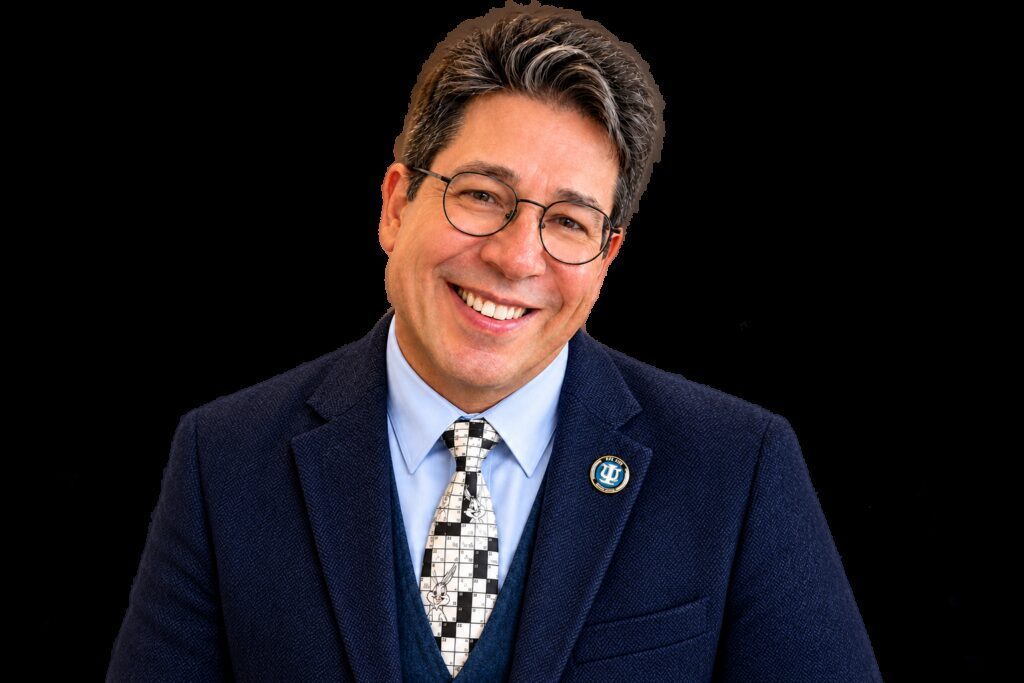
Layton Curl
Professor of Psychology
Psychological Sciences
[email protected]I'm Teaching
Introductory Psychology
Careers and Professional Development in Psychology
Social Psychology
Psychology of Sexuality
Advanced Psychological Research Methods
Biography
I joined the faculty at Metropolitan State University of Denver in 2004 and have spent more than two decades teaching, mentoring students, conducting research, and contributing to the University. Before making Denver home, I taught at universities in New York, Mississippi, and Japan.I earned my Ph.D. in Psychology and M.A. in Experimental Psychology from the University of Mississippi and my B.A. in Psychology from Lyon College. I also earned a Diploma in Asian Studies from Kansai Gaidai University in Japan and, more recently, completed the Management Development Program at Harvard University’s Graduate School of Education.
During my career at MSU Denver, I served as Chair of the Department of Psychological Sciences for more than a decade. In 2022, I was honored as the College of Letters, Arts and Sciences Chair/Director of the Year. After many years in academic leadership, I returned my primary focus to the parts of university life that first drew me to the profession: teaching, working closely with students, conducting research, and exploring consequential questions about how people think and behave.
My own path to higher education was not especially conventional. I was born in Arkansas and spent much of my early life moving throughout the South and Midwest, including years in small towns, trailer parks, and working on family farms. Educational opportunities were sometimes limited, but curiosity and persistence eventually opened unexpected doors. While in high school, I earned an opportunity to study abroad in Japan, where I completed part of my high school education and later returned to study at Kansai Gaidai University. Living abroad at a young age changed how I understood culture, identity, and human behavior and ultimately helped lead me to psychology.
I was never the student who understood everything on the first try. I was, however, persistent. That experience continues to shape how I teach and mentor students today. I believe intellectual ability develops through curiosity, effort, careful thinking, and a willingness to reconsider what we think we know. Some of the most capable students I have taught were not the ones who found college easiest, but the ones who learned to persist when it was difficult.
My work has also taken me well beyond the traditional classroom. I have co-produced numerous educational films examining culture, human sexuality, gender, identity, relationships, and the search for a meaningful life. These projects including The Meaningful Life, Dimensions of Culture, Becoming Me: The Gender Within, Rocking the Cradle: Gay Parenting, and the 21-part Portraits in Sexuality series, have been used in classrooms in the United States and internationally.
Travel remains an important part of my life and an extension of my longstanding interest in culture and human behavior. My spouse and I have traveled extensively throughout the world, visiting every continent except Antarctica. At home, we share our lives with Fang, our remarkably long-lived and equally opinionated cat. At nearly 30, he’s older than most of my students.
One of the things I value most about being a professor is the opportunity to work with students who are still figuring out where they are going. If you are curious about something we are studying, interested in psychology or research, considering what comes after college, or simply trying to find your next step, please feel free to say hello. I am always glad to talk with students who ask good questions, think deeply, and are willing to try again when something does not come easily.
You do not have to have everything figured out. You just have to start.
Research Interests
-
My research lies primarily at the intersection of social, political, and multicultural psychology, with additional interests in human sexuality, media influence, judgment and decision-making, and the psychological processes through which people interpret social and political information.
My current research program examines how political identity, cognitive biases, perceptions of social consensus, and exposure to information shape what people believe about the political world. I am particularly interested in the gap that can develop between objective information and subjective perceptions of reality: why people with access to the same information can arrive at dramatically different expectations, memories, and conclusions.
Much of this work is conducted with my colleague Dr. Courtney Rocheleau and a talented team of undergraduate research assistants at MSU Denver. We regularly present our research at the International Society of Political Psychology and involve students directly in the process of developing research questions, collecting and analyzing data, interpreting findings, and communicating psychological science.
Our recent peer-reviewed article, “Polarized perceptions—how anchoring shaped voter expectations to the 2024 presidential election,” was published in Discover Psychology. Using a nationally representative sample, the study examined affective polarization, consensus bias, and the powerful role of anchoring in shaping Americans’ expectations about the presidential election. The findings contribute to a broader program of research investigating how partisan identity and basic cognitive processes can influence perceptions of political reality, electoral expectations, and trust.
My broader scholarship reflects a longstanding interest in culture and human social behavior. Earlier work has examined prejudice, cross-cultural psychology, human sexuality, narcissism and relationships, and teaching and learning in higher education. I have also co-produced educational films exploring culture, gender, sexuality, altruism, happiness, identity, and human relationships.
Across these different areas, a common question connects much of my work: How do our identities, experiences, social environments, and cognitive biases shape what we perceive to be true?
Teaching Interests
-
I teach psychology as both a science and a way of thinking. My goal is not simply for students to remember what psychologists have discovered, but to become better at evaluating evidence, questioning assumptions, recognizing bias, and using psychological science to understand people and the world around them.
I also believe rigor and compassion belong in the same classroom. Students should be challenged to think carefully and do meaningful work, while knowing that learning often involves uncertainty, mistakes, and second attempts. The best teaching helps students leave a course knowing more than when they entered, but also more curious, more confident, and better equipped to think for themselves.
Education
PhD in Psychology
University of Mississippi
MA in Experimental Psychology
University of Mississippi
BA in Psychology
Lyon College
Other in Asian Studies
Kansai Gaidai University of Japan
Other in
Mountain View High School
Published Works
- Curl, S. L., Rocheleau, C. (2025). Polarized perceptions—how anchoring shaped voter expectations to the 2024 presidential election. Discover Psychology, 5(1). https://doi.org/10.1007/s44202-025-00365-0.
- Schmitt, P. D., Curl, S. L. (2017). Narcissism and the Strategic Pursuit of Short-Term Mating: Universal Links across 11 World Regions of the International Sexuality Description Project-2. Psychological Topics, 26(1), 89-137.
- Richmond, S. A., Curl, S. L., Ropp, A., Woody, D. W. (2017). RMPA faculty mentor program: Advice to faculty from faculty. Society of Teaching of Psychology, http://teachpsych.org/resources/Documents/ebooks/teachingtips.pdf.
- Richmond, S. A., Murphy, C. B., Curl, S. L., Broussard, K. (2015). The effect of immersion scheduling on academic performance and student’s ratings of instructors. Teaching of Psychology, 42(1), 26-33.
- Watson, M., Curl, S. L. (2013). U.S./Ethiopian/South African Connections: An Instructor's Manual. Films for the Humanities and Sciences.
- Curl, S. L., Watson, M. (2013). Intercultural Connections in Psychology: Altruism, Dimensions of Culture, and Happiness: Five Dimensions of Culture in Ethiopia, South Africa, and the U.S. Films for the Humanities and Sciences, http://digital.films.com/play/CYDWZU.
- Watson, M., Curl, S. L. (2013). Intercultural Connections in Psychology: Altruism, Dimensions of Culture, and Happiness: The Pursuit of Happiness in Ethiopia and the U.S. Films for the Humanities and Sciences.
- Watson, M., Curl, S. L. (2013). Intercultural Connections in Psychology: Altruism, Dimensions of Culture, and Happiness: The Role of Altruism in a Meaningful Life. Films for the Humanities and Sciences.
- Richmond, A., Curl, S. L. (2010). A Comparative Study of the Immersion Classroom in Higher Education: One Psychology Department's Discovery.
- Watson, M., Curl, S. L. (2010). Altruism & Helping Behavior: The Ethiopia Project. Films for the Humanities and Sciences.
- Watson, M., Curl, S. L. (2009). Becoming Me: The Gender Within. Films for the Humanities and Sciences.
- Watson, M., Curl, S. L. (2009). Becoming Me: Transgenderism. Films for the Humanities and Sciences, http://digital.films.com/play/RHFWJ7.
- Watson, M., Curl, S. L. (2009). Instructor's Guide to accompany Becoming Me: The Gender Within. Films for the Humanities and Sciences.
- Watson, M., Curl, S. L. (2008). Rocking the Cradle: Gay Parenting. Films for the Humanities and Sciences.
- Watson, M., Curl, S. L. (2007). Instructor's Guide to accompany Rocking the Cradle: Gay Parenting. Films for the Humanities and Sciences.
- Gladman, T., Szarkowski, A., Curl, S. L. (2007). Motivation for Second Language Learning: An Exploratory Study in Japan. Comparative Culture, 13, 87-96.
- Watson, M., Curl, S. L. (2007). Rocking the Cradle: Gay Parenting. Films for the Humanities and Sciences.
- Watson, M., Curl, S. L. (2006). Instructor's Guide to Accompany Portraits in Human Sexuality. Films for the Humanities and Sciences.
- Watson, M., Curl, S. L. (2006). Portraits in Human Sexuality. Films for the Humanities and Sciences.
- Watson, M., Curl, S. L. (2006). Portraits in Human Sexuality. Films for the Humanities and Sciences.
- Gladman, T., Curl, S. L. (2005). Willingness to Communicate, Ethnocentrism and Intercultural Communication Apprehension in an Expatriate Population: A Pilot Study. Comparative Culture, 11, 15-20.
- Gladman, T., Curl, S. L. (2004). Variables Contributing to Acculurative Stress in Japanese Sojourners. Comparative Culture, 10, 39-48.
- Curl, S. L. (2002). Wimmin, wimps & wallflowers: An encyclopedic dictionary of gender and sexual orientation bias in the United States. International Journal of Intercultural Relations.
- Landis, D., Barrios, B., Curl, S. L., Black-Gutman, D., Chesterton, P. (2001). Cross-cultural generality of equal opportunity climate: A study of college students. International Education, 30, 5-18.
- O'Shea, W., Moore, M., Curl, S. L., Banatwala, T. (2000). Virtual Workgroups Operations Manual for the "Sale Call" Game. Center for Applied Research and Evaluation.