
Have Questions? We have answers.
Contact Us
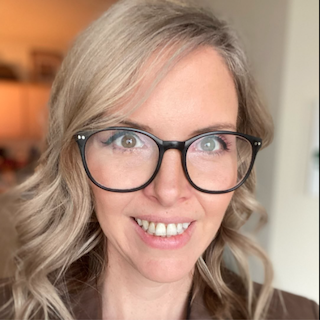
Jennifer Cheek
Assistant Professor of Criminal Justice and Criminology
Criminal Justice & Criminology
[email protected]Office Hours
Office Hours: Thursday 12:00p - 1:45p
Virtual Office Hours: Wed 10-12
Biography
I grew up in the southern region of the United States, moving often. I was born in Houston, TX, grew up outside of Richmond, Virginia, before moving to GA, and finally settling in the New Orleans area at 17 years old with my family of origin. I went to three different high schools in three different states. This experience taught me how society and culture influence human behavior. I have since lived in Starkville, MS; Chicago, IL; Nashville, TN, and North Manchester, Indiana, before moving to Denver. I began at Metro State in Fall 2023, and I come with over 11 years of teaching experience in Sociology and Criminology. I have a PhD in Sociology, and my teaching and research interests are in social stratification and crime; victimology; human trafficking and gendered violence; and international crime. My research has been published in Societies without Borders.Prior to teaching, I lived in New Orleans and worked with individuals with intellectual disabilities ensuring they had adequate services. I also previously taught a plant-based healthy eating course, Health Starts Here, at Whole Foods.
Outside of my work, I try to get outdoors and be active as often as possible. I ski, snowboard, run, bike, hike, kayak, camp, disc golf, and practice yoga. I also enjoy creating art, cooking, baking, and listening to music. I'm learning to DJ and create electronic music (mostly house, breakbeat, and drum and bass). I love to travel and have visited most U.S. states (only 14 to go!), Germany, Austria, Mexico, Hungary, and Costa Rica.
Research Interests
-
My research focuses on victimology, and related issues such as gender, race, class and other intersectional dimensions of stratification, crime, human rights, and social movements. Specifically, I study sex trafficking and other forms of gendered violence in international contexts. I employ mixed methodologies, depending on the research question(s) and accessibility of data given the underground nature of such crimes.
Teaching Interests
-
The overall purpose of college is to develop skills in reading, writing, and analytical thinking, which can be applied to a career of one’s choosing. As a teacher, I specifically seek to develop students’ critical thinking, communication and application skills. Furthermore, I interact with my students in such a way that they find the material exciting and meaningful in their personal and professional lives. And to be an effective teacher, teaching methods and philosophies must be under constant evaluation, with an eye towards serving students so they can learn.
My first goal is for students to make progress towards critical thinking. As an instructor, it is my responsibility to help students understand the social forces which enable and constrain our behavior. I encourage students to step outside of their comfort zone and challenge underlining assumptions and common-sense notions of the world when thinking about social forces and how they shape human behavior. For example, I include in-class experiments and activities, such as the Breaking Social Norms experiment and the Privilege Walk activity. The Breaking Social Norms experiment asks students to step outside their comfort zone and commit a deviant, but not illegal, act to examine the responses of those around them, and what that reaction tells us about social norms. The Privilege Walk is an activity which asks students to step forward if they possess certain status privileges and back for disadvantages, resulting in a distribution of students across a privilege/oppression spectrum. The distribution helps illuminate how students’ peers have had very different experiences with privilege and/or disadvantage. Afterwards, students participate in group discussion focused upon those diverse backgrounds and experiences. They learn that there are structural patterns in who has privilege and who does not. We continue to examine these patterns throughout the course. My students’ critical thinking skills are assessed by measuring the quality of their contribution to group discussions and activities, often through low stakes writing assignments.
My second goal is for my students to make progress towards their written and verbal communication skills. Professional communication skills are important for all college graduates to be successful on the job market and in life. I accomplish this by having classroom discussions and assigning written tasks throughout the semester. Furthermore, I have group discussions to allow students to share their different perspectives and experiences. My classroom discussions vary in structure depending on the content and activities planned for the day. Some are highly structured, while others are much less so. For instance, after the Privilege Walk, I ask students to write about their experience in doing the activity on paper first, which serves as a guide, then as people are finishing up, I ask for volunteers to discuss their differing experiences and perspectives. In other scenarios, I ask more informal questions after showing a video or audio clip. I also require written assignments. Writing and revising allows students to practice developing their voice and writing style. In assessing student writing, I ensure that each student progresses in terms of organization, proofreading, and development of an argument/thesis for every paper.
My third goal is for my students to demonstrate progress in applying concepts to the real world. In doing so, it is my hope that they will continue this practice in all areas of life. I aim to develop students’ application skills by demonstrating how to apply concepts to the ‘real world’ and then allowing students to practice on their own. For example, in one of my class exercises, students analyze the gendered nature of idealized managerial characteristics. In doing so, students are able to see how job postings, which seem gender neutral, are actually highly gendered. Students practice on their own through a variety of different assignments. For example, I require my Intro level students to submit two writing assignments, offering several options depending upon student interests. Their options include the Food Stamp Challenge, an analysis of crime in the media, The Breaking Social Norms experiment, and an analysis of song lyrics. Additionally, I often discuss and share news which illustrate the concepts we are discussing in class. I believe that connecting theory and concepts presented in class to the real world allows students to enjoy learning and increases the chance that they remember the material. I assess students’ application skills through formal and low stake writing assignments, test questions, and more informally through class discussions.
In conclusion, sharing my excitement and passion of sociology and criminology is critical to student satisfaction and learning the material. It is my hope that I will have allowed students to fall in love with questioning and learning from the world around them, taking away important sociological concepts which they can apply to their lives in meaningful ways. Their academic, intellectual, and professional success reflects my success as a teacher.
Education
PhD in Sociology
Mississippi State University
MS in Applied Sociology
Southeastern Louisiana University
BA in Psychology
Southeastern Louisiana University
Published Works
- Cheek, J. An Evaluation of Antitrafficking Victim Service Organizations. Routledge.
- Cheek, J. (2025). Human Trafficking. (pp 10). Springer Nature. https://doi.org/10.1007/978-3-031-95987-5.
- Cheek, J., Peterson, L. (2018). Sorting Out Concern: European Attitudes Toward Human Trafficking. Societies without Borders, 12(2), 18. https://scholarlycommons.law.case.edu/swb/vol12/iss2/8.