
Have Questions? We have answers.
Contact UsCHHS IPE Spotlight: Building the next chapter together


As Kathy Hardin, Ph.D., steps into her new role as director of Interprofessional Education, she is beginning with a simple premise: There is no one-size-fits-all model for collaboration.
IPE can include a jointly taught course, a simulation, a guest lecture, a shared assignment or an informal exchange among faculty and students. And though the modalities may vary, what matters is that people share across boundaries to gain a broader understanding of the challenge before them.
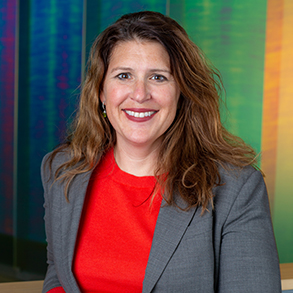
“Interprofessional Education brings together people from different disciplines, learning from each other to develop a broader and more holistic understanding how to improve health outcomes.”
– Kathy Hardin
Hardin brings the perspective of a speech-language pathologist who has spent decades working on interdisciplinary teams and as a professor in MSU Denver’s Department of Speech, Language, Hearing Sciences, specializing in traumatic brain injury, stroke, dementia and other acquired brain conditions.
That clinical experience has shown her that communication across professions is not an optional extra – it is essential to providing the care people deserve.
When professionals fail to share information effectively, Hardin said, the burden often falls back on patients and families, who may have to repeat the same story to provider after provider. IPE gives students a chance to practice interprofessional team communication before the stakes are real.
Her first priority in the new role is to listen. Hardin plans to learn how each CHHS department already approaches IPE, identify effective work that may not yet be widely visible, and find practical places to grow. She also wants faculty to receive recognition and support for collaborative work that may too often remain “invisible service.”
That could mean introducing students to interprofessional learning earlier, creating shared modules or resources that faculty can adapt, and expanding experiential activities. Hardin sees particular potential in helping students understand the roles of other professions – and, in the process, become more confident about their own.
“You don’t need to have all of the answers,” she said. “You can understand your role and know there are other professions that can help you do your role better. If we don’t have those conversations, you might not know those roles even exist.”
The Gina and Frank Day Health Institute Tower, scheduled to open in fall 2027, will create new opportunities for that work. By bringing disciplines and clinical learning spaces together, the DHI Tower can make collaboration more natural.
But Hardin cautions that space alone is not a strategy. Faculty and staff must develop a shared vision for how the building will support students, community partners and the broader public.
She also hopes to invite alumni and employers into the conversation. Recent graduates can identify collaborative skills they had to learn after entering the workforce, helping CHHS strengthen the preparation current students receive. Community partners can help ensure that learning experiences reflect contemporary practice and the needs of the people they serve.
Hardin’s approach is intentionally practical: Listen, identify the easiest places to begin and build from there. Over time, she wants IPE to become an expected part of the CHHS experience – not one program or one person’s responsibility, but a culture in which students and faculty routinely look beyond their own disciplines to enhance student learning and workforce development.
“The teaming components are going to be more important than ever,” Hardin said. “The workforce itself requires the team to provide the health care that people deserve.”